Raita Recipe for Biryani
Biryani raita is chilled whole milk dahi whisked smooth and folded with raw pyaaz, kheera, pudina and bhuna jeera, then salted only at the last minute. The cool fat in the curd softens chilli heat and ghee richness, which is why every dum biryani plate needs one.
Why Dahi Tames a Biryani
Chilli heat comes from capsaicin, which dissolves in fat and is bound by casein, the milk protein in curd. A spoonful of whole milk dahi therefore does more against a spicy biryani than a glass of water can.
Low fat curd and watery yogurt carry less of both, so the cooling effect is thinner. Full cream dahi, or hung curd loosened with chilled water, gives the body that sits well against ghee, fried pyaaz and meat.
The Biryani Antidote, Casein, Capsaicin and Cooling
Chilli heat from a spicy biryani registers on the TRPV1 receptors of the tongue, and water only spreads it around. The casein in dahi binds to capsaicin and carries it away, which resets the palate between bites.
Ayurvedic tradition calls the ghee, rice and whole spices of biryani ushna, or heating, and cultured dahi sheeta, or cooling. That old pairing logic is a large part of why raita has stayed on the biryani plate for generations.
The Chemistry of Raita, Why It Fails by Morning
Osmosis and the Watery Bowl
Chopped vegetables begin leaching moisture into dahi within about 20 minutes, which thins the curd and leaves it grainy and separated. Salt the vegetables lightly for 5 minutes, press the moisture out through a muslin cloth, and fold them in cold.
Delayed Salting
Salt pulls whey out of curd as well as water out of vegetables, so it thins raita faster than any other ingredient. Season the dahi only at the moment of serving, never during prep or storage.
Why a Blender Spoils Dahi
A blender whips curd too hard and breaks its body down into a thin liquid that no vegetable can sit in. Whisk gently with a fork or churn with a wooden mathani until just smooth.
Kala Namak and Bhuna Jeera, What Changes the Taste
Kala namak carries a sulphurous tang and bhuna jeera a toasted, nutty depth, and together they change a bowl of raita more than any extra spoon of dahi. Raw cumin and plain salt taste flat and harsh by comparison.
Add them in small amounts and taste after a minute, because both bloom as they sit in cold curd. Chaat masala then supplies the sour edge, so extra lemon juice is rarely needed.
Table salt gives plain saltiness, while kala namak is an unrefined rock salt that adds sulphurous notes and a trace of minerals. Use it for the savoury tang and keep a pinch of regular salt for the end.
Fresh Dahi or Old Dahi, What Fermentation Does
As dahi ages, its bacteria keep turning lactose into lactic acid, so the pH slides from around 4.5 when fresh toward 4 or lower. Dahi set for 4 to 6 hours stays mild and gently sweet, while leftover curd from the back of the fridge turns sharp and fights the spices.
When dahi is already sharp, sugar flattens the savoury depth, so whisk in one or two tablespoons of chilled whole milk or fresh malai instead. That softens the acidity and restores body without sweetening the raita.
Which Dahi to Buy
Full fat buffalo milk dahi, with roughly 6 to 8 percent milk fat, gives a thick custard like base without cream or Greek yogurt. Some packaged toned dahi carries stabilizers and a thinner body, which makes the raita weep sooner.
Where Raita Sits in the Biryani Meal
Raita is not a starter and not a salad, it is the cooling spoonful taken between bites of biryani. A salad brings fibre and acid, a chutney brings concentrated flavour, and raita brings fat and cold to settle the heat.
Serve it straight from the fridge in a small bowl beside the hot rice, and spoon it onto the side of the plate so the grains stay separate. Keep a clean spoon for the raita, since a warm spoon carries heat into the bowl and speeds up souring.

Biryani Raita, the Master Recipe
Ingredients
- 2 cups (500 g) fresh whole milk dahi, well chilled
- 2 tablespoons (30 ml) chilled water or milk, to loosen
- 1 small red onion (80 g), finely diced
- 1 small kheera (120 g), seeded and diced
- 1 small tomato (70 g), seeded and diced, optional
- 2 tablespoons (6 g) torn pudina
- 2 tablespoons (6 g) chopped hara dhania
- 1 green chilli, minced
- 1 teaspoon (2 g) bhuna jeera powder
- 1/2 teaspoon (2 g) kala namak
- 1/2 teaspoon chaat masala
- Regular salt to taste, added last
- 1 to 2 tablespoons chilled whole milk or malai, only if the dahi is sharp
Method
- Whisk the dahi gently with a fork or mathani with the chilled water until smooth and pourable like thick cream.
- Soak the diced onion in ice water for 7 to 10 minutes and pat dry, then salt the diced kheera lightly for 5 minutes and press it dry in a muslin cloth.
- Fold in the onion, kheera, the firm outer walls of the tomato, green chilli, pudina and hara dhania.
- Stir in the bhuna jeera, kala namak and chaat masala, then taste.
- Cover and chill for 20 minutes.
- Add regular salt only if needed just before serving, whisk in the milk or malai if the dahi tastes sharp, and dust with a little bhuna jeera.
Yield for 2, 4 and 8 Servings
| Ingredient | Serves 2 | Serves 4 | Serves 8 |
|---|---|---|---|
| Dahi | 1 cup (250 g) | 2 cups (500 g) | 4 cups (1 kg) |
| Chilled water | 1 tablespoon | 2 tablespoons | 4 tablespoons |
| Red onion | 40 g | 80 g | 160 g |
| Kheera | 60 g | 120 g | 240 g |
| Tomato | 35 g | 70 g | 140 g |
| Pudina and hara dhania | 1 tablespoon each | 2 tablespoons each | 4 tablespoons each |
| Bhuna jeera | 1/2 teaspoon | 1 teaspoon | 2 teaspoons |
| Kala namak | 1/4 teaspoon | 1/2 teaspoon | 1 teaspoon |
The working ratio is one cup of dahi to one tablespoon of chilled water, which gives a thick but spoonable raita. Use two tablespoons per cup for a pouring style.
Vegetable Prep, Onion, Tomato and Kheera
Cold Water Onion Soak
Soak finely diced onion in ice water for 7 to 10 minutes and pat it dry. This takes out the harsh sulphur bite, keeps the crunch and avoids a raita that tastes of stale onion by the end of the meal.
Tomato Walls Only
The seed pulp and gel inside a tomato are mostly acidic water. Cut them away and dice only the firm outer walls so the raita does not bleed pink or turn slushy.
Dice Kheera, Do Not Grate
Grating bursts most of the cells in kheera and floods the dahi with water. A fine dice of about 2 to 3 mm keeps its crunch for hours, and grated kheera, if you prefer it, must be salted and squeezed dry first.
Dahi ki Chutney, the Hyderabadi Companion
Dahi ki chutney is the thin, tempered cousin of raita that Hyderabad serves beside dum biryani and mirchi ka salan. It is looser than raita and closer to a pouring sauce, so the rice drinks it up.
Whisk one cup of dahi with a quarter cup of chilled water, then add finely minced pyaaz, two green chillies, pudina, hara dhania and a little salt. A baghar of one teaspoon of ghee, half a teaspoon of jeera and a pinch of hing poured over the top lifts the aroma before you stir.
Burani raita, with roots in the Persian borani tradition, is a garlic flavoured dahi that Hyderabad serves with biryani, and it is a good pick for mutton biryani. Crush two small garlic cloves with salt before whisking them into the dahi so the garlic spreads evenly.
Bhuna Jeera and Kala Namak, the Sanjeev Kapoor Style
This is the simple version in the Sanjeev Kapoor manner, where freshly roasted jeera and kala namak do the work instead of a long ingredient list. The dahi is whisked thick and smooth, and the spice carries the flavour.
Dry roast one tablespoon of jeera on low heat for about a minute until it darkens and smells nutty, then cool it and crush it coarsely. Stir half into the dahi with the kala namak and keep the other half for dusting on top.
The Triple Jeera Method
Use jeera three ways in one bowl, coarsely pounded raw jeera for crunch, dark roasted bhuna jeera powder for aromatic bitterness, and whole jeera bloomed in ghee for lingering warmth. Each treatment lands at a different point on the tongue, which is why the raita tastes rounded rather than flat.
Pound the raw jeera lightly in a mortar so the seeds crack but do not turn to powder. Bloom the whole seeds in hot ghee for ten seconds and let them cool before they meet the dahi.
Boondi and Kheera Anar, the Tarla Dalal Homestyle
The Tarla Dalal homestyle approach is the family table raita, with kheera and anar for vegetable biryani and boondi for the pulao plate. Both are mild, bright and easy for children to eat.
For soft boondi, soak one third cup in lukewarm, lightly salted water at about 45 degrees Celsius for 90 seconds, then press it gently between your palms without crushing. The warm water draws out stale frying oil and excess salt, so the boondi stays plump and light.
For crisp boondi, fold it in dry about five minutes before serving. Add two tablespoons of anar dane and a tablespoon of crushed roasted peanuts to the kheera version for crunch.
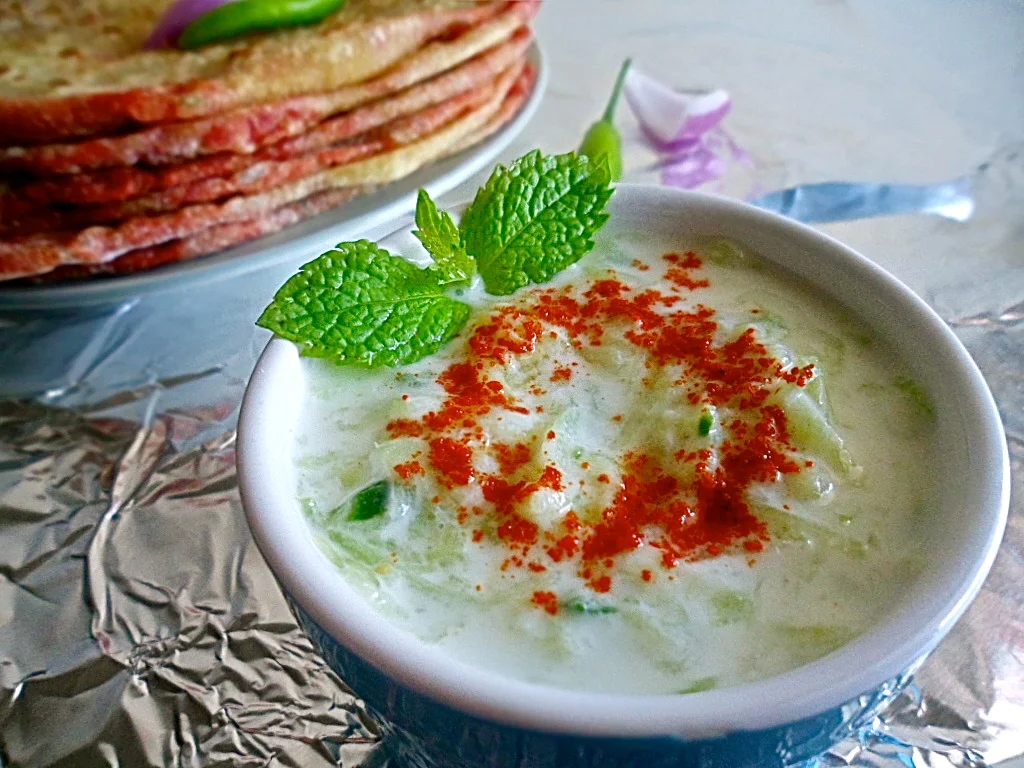
Kachumber Raita, the Shaadi Classic
Kachumber raita is the roadside and shaadi favourite, with diced pyaaz, tamatar and kheera in lightly spiced dahi. It is the safe choice when the biryani type is unknown or the table is large.
Seed the tamatar so the pulp does not thin the curd, and keep the pieces about the size of a chickpea. Chaat masala and a little bhuna jeera give it the familiar sharp edge.
Tadka Raita for Coastal Biryani
A tadka raita suits coastal and South Indian biryanis, where mustard and curry leaves already sit in the rice. Heat one teaspoon of ghee, crackle half a teaspoon of rai, add ten curry leaves and a pinch of hing, then pour it over the dahi after it has cooled for a minute.
Stir it in only at the table for the best aroma, because the smell fades quickly in chilled curd. A spoonful of chilled milk whisked into the dahi steadies the sourness if the biryani is very peppery.
Mustard Oil Tadka, Hot Over Cold
Heat mustard oil until it just smokes, which mellows its sharp bite, then add brown mustard seeds, curry leaves and dry whole red chillies. Spoon this tadka over the top of cold dahi rather than stirring it in, so the bowl keeps a hot and cold contrast that cuts greasy mutton biryani.
Let the oil rest for a few seconds off the heat before pouring so the dahi underneath stays intact. It is the pachadi style of raita and it suits mutton biryani especially well.
Dhungar Raita, the Smoked Method
Dhungar smoking gives boondi or burnt garlic raita the smoky depth of Awadhi bawarchikhana cooking. Heat a small piece of lump charcoal until red hot, set it in a steel katori on top of the whisked dahi, and drop a little ghee with a pinch of hing or one clove on the ember.
Cover the bowl tightly for 3 minutes, then lift out the katori and stir. Work in a ventilated kitchen and keep the charcoal away from plastic and cloth.
Sanjeev Kapoor Style and Tarla Dalal Style, Two Ways to Think About Raita
The Sanjeev Kapoor style in this article follows the restaurant standard of texture and polish, where the whey is strained through a sieve for a silky mouthfeel and the boondi is soaked in lukewarm salted water to purge frying oil. The bowl is plated with a few torn mint leaves and a light streak of paprika.
The Tarla Dalal style follows the everyday home table, with lighter raw vegetable raitas such as lauki, spinach and flaxseed that suit a diet built around white basmati rice. The fibre in those vegetables helps moderate the rise in blood sugar that a plate of rice can cause.
These two labels describe cooking styles rather than a single broadcast recipe. Mix them freely, since both end with chilled dahi beside hot biryani.
What Is the Difference Between Raita, Pachadi and Dahi ki Chutney?
Raita is whisked dahi folded with raw or lightly cooked vegetables and served cold, while pachadi is its South Indian relative that usually adds ground coconut, mustard and curry leaves. Dahi ki chutney is thinner than both and is tempered with a baghar of ghee and jeera.
Regional Raitas, From Kolkata to Kerala
Bengali Doi with Bhaja Moshla
Bengali style raita starts with tok doi whisked smooth and seasoned with bhaja moshla, a roasted blend of jeera and coriander, with a little sugar and finely diced kheera. It is gentle enough for Kolkata biryani with its aloo and egg.
South Indian Pachadi
Pachadi is thickened with ground coconut and tempered with rai, curry leaves and green chilli, which makes it richer and slightly sweeter than northern raita. Sambar onions, lightly crushed by hand, often replace the sliced red onion, and it is the natural partner for Malabar and Thalassery biryani.
Gujarati Style Kachumber Raita
The Gujarati style balances the dahi with a pinch of sugar, a little grated ginger and a squeeze of lemon, so it sits between sweet and sharp. Diced kheera, tamatar and pyaaz keep the crunch.
Punjabi Style Raita
Punjabi raita is thick and generous, whisked from full cream dahi with pyaaz or boondi and dusted on top with red chilli powder and bhuna jeera. It is the version that stands up to heavy meat and butter dishes.
More Raita Variants Worth Making
Pudina Raita
Blend a handful of pudina, hara dhania and one green chilli with three tablespoons of dahi into a bright green paste. Fold the paste into the rest of the dahi just before serving so the colour stays fresh.
Pineapple Raita
Dice ripe pineapple small and fold it into lightly sweetened dahi with a pinch of black pepper. Fresh pineapple contains bromelain, which turns dahi bitter if it sits, so add it at the last minute or use well drained canned pineapple.
Mixed Vegetable Raita
Combine diced kheera and tamatar with grated gajar and boiled, cooled green peas in dahi seasoned with bhuna jeera and chaat masala. It is the practical choice for a mixed table where children and adults share one bowl.
Beetroot Raita
Boil or steam beetroot until tender, grate it and fold it into dahi for a deep pink raita with earthy sweetness. Season with bhuna jeera and a little salt, and serve it chilled beside a mild pulao.
Lauki Raita
Grate lauki, simmer it for three minutes, cool it fully and squeeze out the water before folding it into the dahi. Finish with bhuna jeera, and add a rai and curry leaf tadka for a South Indian turn.
Carrot Raita
Grate gajar fine and fold it into dahi with a pinch of sugar and roasted jeera for a light and slightly sweet bowl. A rai tadka makes it a good partner for lemon rice or a plain vegetable pulao.
Banana Raita
Slice a ripe but firm kela into sweetened dahi with a pinch of cardamom and black pepper. Add it only at the table because the slices darken and soften quickly.
Fruit and Anar Raita
Fold anar dane, small apple pieces, grapes and a little banana into dahi sweetened with a pinch of sugar and seasoned with kala namak. It suits festive tables and mild pulao better than a heavily spiced biryani.
Onion Raita
Onion raita is the restaurant staple served with biryani, parotta and ghee rice, and Tamil kitchens call it vengaya thayir pachadi. Use red onion, ice soaked and dried, with green chilli and hara dhania in thick dahi.
Tomato Raita
Tomato raita uses only the firm outer walls of ripe tamatar, diced fine, with a little grated ginger and a curry leaf tadka. It is sharper than kheera raita and balances a creamy chicken biryani.
Aloo Raita
Aloo raita uses boiled and cooled potato in small cubes, tossed in dahi with bhuna jeera and red chilli powder. Keep the potato separate and mix it in just before serving so it does not release water into the curd.
Spinach Raita
Blanch a bunch of palak for one minute, squeeze it dry, chop it fine and fold it into dahi with roasted jeera and a little garlic. The deep green colour looks good beside a golden vegetable biryani.
Flaxseed Raita
Dry roast one tablespoon of alsi, grind it coarsely and stir it into the dahi with bhuna jeera. It adds fibre and a nutty flavour to an otherwise plain bowl.
Raita Variants at a Glance
| Variant | Prep time | Best pairing | Spice level |
|---|---|---|---|
| Kheera | 10 minutes | Any biryani | Mild |
| Boondi | 10 minutes | Pulao and vegetable biryani | Mild |
| Kachumber | 15 minutes | Chicken and mutton biryani | Medium |
| Pudina | 10 minutes | Awadhi and Lucknowi biryani | Medium |
| Dahi ki chutney | 10 minutes | Hyderabadi dum biryani | Sharp |
| Burani | 10 minutes | Mutton biryani | Medium |
| Tadka | 15 minutes | Malabar and coastal biryani | Medium |
| Pineapple | 10 minutes | Vegetable biryani | Mild |
| Mixed vegetable | 15 minutes | Any biryani | Mild |
| Beetroot | 20 minutes | Pulao | Mild |
| Lauki | 20 minutes | Vegetable biryani | Mild |
| Carrot | 10 minutes | Pulao | Mild |
| Banana | 5 minutes | Very spicy biryani | Mild |
| Fruit and anar | 10 minutes | Festive pulao | Mild |
| Onion | 10 minutes | Hyderabadi and chicken biryani | Medium |
| Tomato | 10 minutes | Chicken biryani | Medium |
| Aloo | 15 minutes | Vegetable biryani and paratha | Mild |
| Spinach | 15 minutes | Vegetable biryani | Mild |
| Flaxseed | 10 minutes | Pulao | Mild |
Ingredient Matrix
| Component | Recommended ingredients | Role in biryani pairing | When to add |
|---|---|---|---|
| Base | Chilled whole milk dahi, hung curd for thickness | Neutralises spice and binds textures | Whisk first |
| Vegetables and add ins | Red onion, seeded kheera, tomato, boondi | Crunch and freshness | After whisking, salt last |
| Aromatics and herbs | Pudina, hara dhania, green chilli | Aromatic lift that cuts grease | Fold in before chilling |
| Signature spices | Bhuna jeera, kala namak, chaat masala | Savoury depth and a digestive aid | Stir in, then taste after a minute |
| Optional tadka | Rai, curry leaves, hing in ghee | Coastal and South Indian pairing | Cool for a minute, add at the table |
Which Raita for Which Biryani
| Biryani | Raita | Reason |
|---|---|---|
| Hyderabadi dum biryani | Dahi ki chutney | Thin and sharp, it cuts through the masala |
| Kolkata biryani with aloo and egg | Simple kheera raita | Mild rice needs only coolness |
| Lucknowi or Awadhi biryani | Light pudina raita | Delicate spices are not drowned |
| Malabar or Thalassery biryani | Tadka raita | Curry leaf echoes the rice |
| Vegetable biryani and pulao | Boondi raita | Texture against soft vegetables |
| Very spicy chicken or mutton biryani | Kachumber with extra thick dahi | Crunch and extra curd settle the heat |
Serving with Mutton Biryani, Pulao and Kulcha
For a rich plate, serve this raita beside the mutton biryani, where the dahi cuts the lamb fat, or beside the vegetable biryani with masala gravy, where boondi raita adds texture. A lighter plate works with the vegetable pulao, which pairs well with kheera or beetroot raita.
Raita also suits bread, and a thick bowl is the right choice beside kulcha because thin raita runs off the bread. Keep the consistency thick for kulcha and paratha and pourable for rice.
Salt and Water, Why Raita Turns Runny
Salt draws water out of pyaaz, kheera and tamatar through osmosis, and that water thins the curd within minutes. Salt the raita only just before the bowl goes to the table, and taste first because kala namak is already salty.
Seed the kheera, press the diced pieces in a clean cloth, and pat the pyaaz dry after rinsing. If the raita still loosens, stir in a spoonful of hung curd to bring the body back.
White Pepper, Anardana and Mint
Whole black peppercorns are already working inside a dum biryani, so many Mughlai style bowls reach for safed mirch, or white pepper, which adds floral warmth without dark flecks. Crushed anardana, the sun dried wild pomegranate, brings an astringent fruity acid that cuts through rich mutton.
Tear the pudina by hand or slice it in a clean chiffonade with a sharp blade, because a dull knife bruises the leaves and turns them dark and bitter. Fold it in just before serving to keep the aroma green and bright.
Technique Notes, Dahi That Behaves
Curd That Splits
Dahi splits into curd and whey when it is warm, over whisked, hit with a hot tadka or salted too early. Keep it cold, whisk only until smooth, and let a tadka cool for a minute before pouring.
Chilled or Room Temperature Dahi
Chilled dahi holds its body, while room temperature dahi loosens quickly once salted and turns sour within hours. Keep the bowl in the fridge until the moment the biryani is served.
Hung Curd, Regular Curd and Low Fat
Hung curd is regular dahi drained in muslin for about 30 minutes, which makes it thick and tangy and ideal for Punjabi style bowls. Low fat dahi is thinner and more watery, so leave out the added water and squeeze the vegetables dry.
Vegan Curd Options
Choose thick unsweetened coconut or soy yogurt and loosen it with a little chilled plant milk. It lacks the casein that binds chilli, so keep the spice a little lighter.
Which Spice When
Use bhuna jeera for toasted depth, kala namak for sulphurous tang, chaat masala for sourness, and a rai and curry leaf tadka for coastal biryani. Hing in the tadka adds a savoury note and settles the stomach after a heavy meal.
Nutrition per Serving
One serving of about three quarters of a cup has roughly 85 calories, 4.5 g protein, 4 g fat and 8 g carbohydrate. These figures are approximate and depend on the dahi you use.
That protein is useful beside a plate that is mostly rice. Fried boondi and added sugar raise the numbers, so keep them modest.
Raita for Biryani FAQ
Why does my raita turn sour?
Dahi that is past its best, or raita left at room temperature after mixing, turns sharp quickly. Use fresh dahi, keep the bowl chilled, and whisk in one or two tablespoons of chilled whole milk or malai to round off mild sourness.
Why is my raita watery?
Salted vegetables release water, and thin or low fat dahi cannot hold it. Salt last, squeeze the kheera and use full cream or lightly hung curd.
How far ahead can I make biryani raita?
Keep the whisked dahi and the chopped vegetables in separate covered boxes in the fridge. Combine them 15 to 30 minutes before serving.
Can I use Greek yogurt for raita?
Yes, but it is thicker and tangier than Indian dahi. Thin it with two to three tablespoons of chilled water or milk per cup until it pours slowly.
Should boondi be soft or crisp in raita?
Soak boondi in lukewarm, lightly salted water for about 90 seconds and press it gently for a soft texture that suits pulao. Fold it in dry about five minutes before serving for a crisp bite.
Which raita goes best with chicken or mutton biryani?
Kachumber raita or dahi ki chutney work well because crunch or sharpness stands up to a rich meat masala. A little extra thick dahi helps when the biryani is very peppery.
Is raita healthy?
Plain raita is low in calories and adds protein and calcium to a plate that is mostly rice. Fried boondi and extra sugar raise the numbers, so keep them modest.
Can I make raita without dairy?
Thick unsweetened coconut or soy yogurt works, though the taste changes. Add a squeeze of lemon and a little kala namak to bring back the tang.
What is the difference between raita and pachadi?
Raita is whisked dahi with raw or lightly cooked vegetables served cold, while pachadi usually adds ground coconut, mustard and curry leaves in the South Indian way. Pachadi is richer and slightly sweeter than northern raita.
Can raita be eaten with biryani every time?
Yes, raita is a standard part of the biryani plate and suits most kinds. Choose a lighter version for mild biryanis and a sharper or crunchier one for very spicy ones.
How do I thicken raita?
Drain the dahi in muslin for 20 to 30 minutes or stir in a spoonful of hung curd. Squeeze the kheera and onion dry, and add the salt only at the end.
What goes with biryani besides raita?
Mirchi ka salan, onion rings with lemon, a plain kachumber salad, boiled egg and papad all sit well beside biryani. Each gives crunch, acid or a savoury sauce that raita alone does not.
How many calories are in raita?
A three quarter cup serving of this raita has roughly 85 calories. Boondi, fruit and sugar raise the figure, while low fat dahi lowers it.
Which dahi is best for raita?
Fresh, full fat dahi set for 4 to 6 hours gives the thickest and mildest base, and buffalo milk dahi is the traditional favourite. Avoid leftover sour curd and thin toned dahi, which weep and taste sharp.
How do I make dhungar raita?
Set a small steel katori on the dahi, place a red hot piece of charcoal in it with a little ghee and a clove, and cover tightly for 3 minutes before stirring. Work in a ventilated kitchen.
Serving, Storage and Timing
Chill the dahi and the bowl, and bring the raita to the table cold beside hot biryani. Plain whisked dahi base keeps for two days in the fridge.
Keep the chopped vegetables and the whisked dahi in separate covered boxes. Combine them 15 to 30 minutes before serving.
Mixed raita is best the same day, and on day two a spoonful or two of fresh dahi restores the body. Do not freeze it, and for hung curd tie two cups of dahi in muslin and let it drain for 30 minutes.
Unglazed clay bowls such as a kulhad or matka wick away surface whey and chill the dahi through evaporation, which thickens the raita and adds an earthy aroma. Rinse the bowl and shake off the water before filling it.