Bhai Dooj 2026: Dates, Legends, Gifts and Wishes
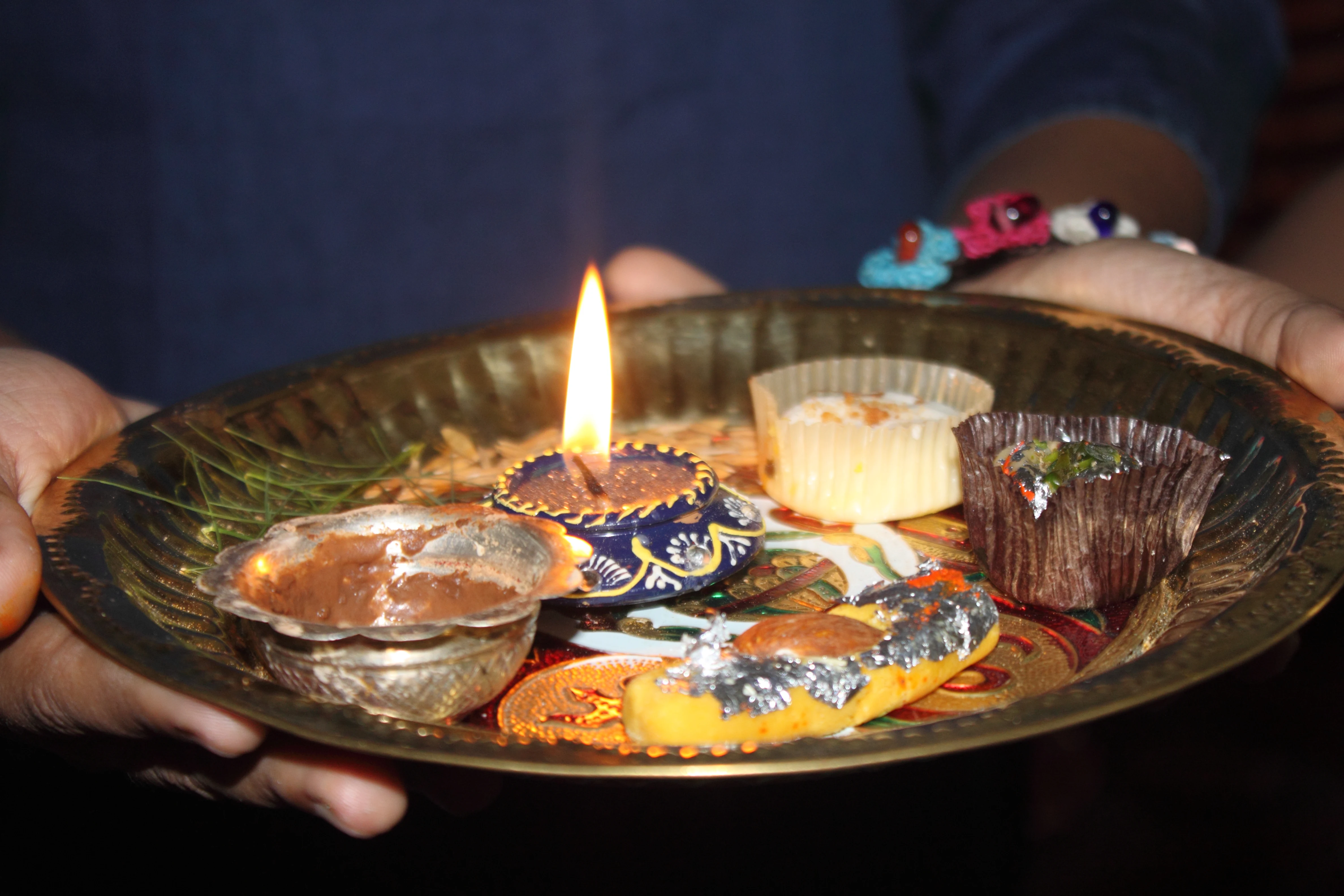
A Kolkata Morning, Forty Years Apart
My dida used to say that a house without a Bhai Phota morning was a house that had forgotten how to listen. She would wake before the crows, before the milkman, before anyone in the flat had opened an eye, and she would not eat a single grain of rice until my mama had walked through the door and sat down on the small asana she kept folded behind the almirah for exactly this one day of the year.
I did not understand as a boy why an entire adult woman would refuse food over a ceremony that took barely ten minutes to perform. I understand it now. The fast was never about hunger. It was about attention, the kind you give something only once a year, the kind that makes an ordinary Wednesday morning feel like it is holding its breath.
There is a particular smell that comes back to me every Kartik, of wet sandalwood being ground on a shil nora, of ghee catching the edge of a flame to make kajal the old way, of fish frying in the next room because a Bhai Phota breakfast in a Bengali home is never light. My mother would sit us all down, cousins included, in a row on the floor, youngest to eldest, and go down the line one at a time.
There was a strange hierarchy to it, the order mattered, the finger used mattered, whether you were an elder sister or a younger one changed which hand touched your brother's forehead. Nobody explained the rules. You absorbed them the way you absorb a language, by being present for it often enough that the logic becomes invisible.
What most people outside Bengal do not realise is how street specific the small print of this festival gets even within a single neighbourhood. In parts of North Kolkata, an old custom survives where the sister places a small piece of iron, sometimes just a rusted key or an old lock, somewhere near the boron dala. The iron is meant to stand in for the strength the brother is being blessed with, tough as metal, unbreakable by death.
Very few younger Bengalis today know why that odd little key sits in the thali their grandmother insists on using. In some families with roots in Bagerhat and Faridpur, a slightly different verse of the chant survives, one with a harsher edge to the words aimed at Yama, almost daring him to try his luck. I have heard it exactly twice in my life, both times from women in their eighties, and neither of them had ever seen it written down anywhere.
There is also a quieter, sadder layer to this day. For sisters and brothers who have lost the other one, Bhai Phota becomes the single hardest morning of the Bengali calendar, harder even than the death anniversary itself, because the ritual keeps happening around them without them.
I have watched an aunt continue applying phonta to a framed photograph long after her brother had passed, because the fast and the chant were never really about the physical presence of a person. They were a promise made to the universe, and promises are kept whether or not the other party can receive them anymore.
Where the Whole Thing Began
Every Bhai Phota morning carries, underneath the sweets and the sandalwood, a story about death standing at a door and being turned away. Yama, the god who collects every soul without exception, visited his sister Yamuna one Kartik day after a long stretch of not seeing her. She welcomed him properly, sat him down, marked his forehead, fed him the best of what her kitchen had, and asked for nothing except that he remember her. Yama, moved by an affection that his position rarely allowed him to receive, granted a boon on the spot. Any brother who receives a phonta from his sister on this day, marked with real love, would be spared an untimely death.
A second, quieter version of the same idea runs through the Mahabharata. After Krishna destroyed the demon Narakasura, he went to see his sister Subhadra, who welcomed him with sweets and a tilak, praying over him the way a sister prays over a brother returning from something dangerous. Some households in Bengal fold both stories together without seeing any contradiction in it. The point of both stories was never really the geography of which god visited which sister. The point was that a sister's attention, freely given, could apparently do something that not even death could argue with.
A palm leaf manuscript called Sarvananda Sundari places the earliest known reference to this ritual, then called Bhratri Dwitiya, as far back as 527 BCE, which means Bengali sisters have been marking their brothers' foreheads on this exact tithi for longer than most of the empires that later ruled this land lasted.
The Day the Rivers Decided
Here is a detail that used to genuinely puzzle me as a child. Some families I knew celebrated Bhai Phota a full day earlier than everyone else, on Pratipada instead of Dwitiya. My friends thought their family panjika was simply wrong. It was not wrong. It was East Bengal geography talking.
In the old undivided Bengal, a land threaded through with rivers, a sister's married home and her parents' home were very often separated by water rather than road. There were no motorcars, and the noise of an engine was unheard of in most villages, so a boat had to be arranged, and a boat depends entirely on weather, tide and the goodwill of a boatman. Kartik skies in East Bengal were unpredictable, prone to sudden showers. So families adjusted the ritual around real transportation risk. There is an old rhyming shorthand for this that has survived in some households to this day, Pratipade phonta, dwitiate neeta, meaning the phonta itself was given a day earlier, on Pratipada, while the invitation to the full feast was kept for the following day, Dwitiya, once everyone had actually arrived safely. It is a small piece of logistics from a world before bridges that quietly rewrote a religious calendar, and it rarely finds a mention in English language writing on this festival.
The Chant Every Bengali Sister Learns Before She Understands It
There is a six line verse that gets taught to Bengali girls the way nursery rhymes get taught elsewhere, memorised long before the meaning behind the words becomes clear. My mother taught it to my sister sitting on the same cane stool every single year until it stopped needing teaching at all.
Bhaier kopale dilam phonta, Jomer duare porlo kanta,
Jamuna dey Jomke phonta, Ami di amar bhaike phonta,
Bhai jeno hoy mota shota.
Loosely, it says, I place a mark on my brother's forehead, and a thorn falls at the door of death itself. Just as Yamuna once marked Yama, I now mark my own brother, may my brother grow strong and sturdy. The wording shifts very slightly by district, some versions end wishing the brother to become tough as iron rather than sturdy, a small linguistic echo of that same iron object families still keep in the thali. What has always struck me is that this is one of the very few Hindu rituals conducted almost entirely in the vernacular rather than Sanskrit. A sister speaks directly, in her own tongue, to death, and expects to be heard.
A Feast That Signals Effort, Not Just Affection
No Bhai Phota morning in a Bengali home ends with sweets alone. The meal that follows the tilak is, in many households, the actual point of the day, and its centrepiece is almost always kosha mangsho, a slow dark mutton curry cooked down until the masala nearly caramelises around the meat. It is deliberately a dish that takes hours and cannot be rushed, which is exactly why it gets made on this day. A sister who has spent a whole morning over a kadai is making a statement that needs no words. Alongside it usually sits basanti pulao, a fragrant yellow rice cooked in ghee with sugar and whole spices, sweet enough to balance the heat of the mangsho.
The sweets that close the meal carry their own small symbolism. Rosogolla, soft and syrup soaked, is often described in Bengali households as standing in for the sweetness that should exist between siblings no matter how many fights came before it. In winters when Bhai Phota falls late enough to catch the first date palm jaggery of the season, nolen gurer sandesh appears on the table, and its arrival is treated almost as a small seasonal blessing rather than just dessert. Malpua, a sweet fried pancake soaked lightly in syrup, is another fixture in many homes, offered as one of the very first things a brother tastes before the main meal begins.
Across India and Nepal, the Same Morning Wears Different Clothes
Travel outside Bengal on this same tithi and the sandalwood disappears, the chant changes language, and yet something underneath stays exactly the same. Understanding these regional versions properly, rather than as a passing footnote, is really the only way to understand what this festival actually is at its core, because no single region owns the full picture.
Bhau Beej in Maharashtra, Goa, Gujarat and Karnataka
In Marathi, Gujarati and Konkani speaking households, the day is called Bhau Beej or Bhav Bij, and the sister's tilak is built from kumkum and rice grains rather than sandalwood and curd. The ceremony still opens with an aarti, the sister circling a lit lamp before her brother's face, and it still closes with a shared meal, but the meal itself looks entirely different from a Bengali one.
Basundi poori, a thickened sweetened milk served alongside deep fried poori, is the dish most associated with the day in Maharashtra, alongside shrikhand poori in some households and puran poli, chakli and karanji left over from the wider Diwali spread. In several Maharashtrian and Gujarati homes, the brother is made to sit inside a small square drawn on the floor, almost like a protective boundary, while the ritual is performed around him.
Women in these communities who have no brother of their own commonly turn instead to worship the moon as a symbolic brother, a small but telling detail about how central the idea of a sibling figure is to the day, even when an actual sibling is not available.
Bhaiya Dooj in the North, and the Dry Coconut of Haryana
Across Uttar Pradesh, Bihar, Delhi, Punjab and Haryana, the festival is usually called Bhaiya Dooj or simply Bhai Dooj, and the tilak here is a mix of vermilion, rice and sandalwood paste rather than the specific three part Bengali version. A distinctive custom in Haryana and parts of Uttar Pradesh involves a dry coconut, locally called gola, tied around its width with a sacred thread called kalewa, which is then used during the brother's aarti as an offering alongside the more usual sweets.
In the Kayastha community, an unusual practice survives where two separate Bhai Dooj observances are kept in the same year, the well known one on the second day after Diwali, and a lesser known second observance kept a day or two after the main one, a custom whose exact origin has been lost to most families who still quietly follow it out of habit rather than explanation.
In Andhra Pradesh and Telangana, the same tithi is marked as Bhatru Dwiteeya or Bhaghini Hastha Bhojanamu, where the emphasis shifts slightly, with brothers travelling to their sisters' homes and being served a meal cooked specifically by her hands as the central act of the day, the meal itself treated as the equivalent of what the tilak is elsewhere.
Bhai Tika in Nepal, and the Legend of Bali Hang
Nepal keeps its version, called Bhai Tika, as the fifth and final day of the five day Tihar festival, arguably the single most emotionally anticipated day of the entire Nepali festival calendar, more so even than the main Tihar evening of Laxmi Puja.
The tika applied here is not a single dot but a tall vertical mark called saptarangi tika, built in seven distinct colours layered one above another on a base of rice paste spread on a banana leaf held to the forehead. Classical texts actually describe five colours rather than seven, red, white, yellow, green and blue, and the exact number in practice still shifts by family and by region within Nepal, with the seven colour version becoming more common in recent decades.
Before the tika, sisters draw three small mandaps or boundary circles on the floor, one each dedicated to Ganesh, to Janmaraj the god of birth, and to Yamaraj himself, and worship each in turn before the brother is seated.
Oil is poured from a copper pitcher along a ring drawn around the brother, and marigold and makhamali garlands are placed around his neck, the makhamali flower prized specifically because it does not wilt easily, taken as a small omen for the brother's own long life. Nepal's own founding legend differs from the Yama Yamuna story told elsewhere.
It tells of a King Bali Hang who fell gravely ill, and his sister Jamuna who pleaded with Yamaraj to spare him, performing an elaborate ceremony of prayer and protection so persistent and so sincere that Yamaraj eventually relented and granted the king a long life, a story that in Nepal is treated as the direct ancestor of every Bhai Tika performed since. In Kathmandu, the Ranipokhari temple opens to the public on this single day each year specifically for people who have no living brother or sister, so that no one in the city need go without receiving or giving a tika that day.
Bhai Jiuntia in Western Odisha
Western Odisha keeps its own distinct festival called Bhai Jiuntia, which does not fall on the same tithi as the rest of India's Bhai Dooj observances and is not built around the Yama Yamuna story at all. Instead, sisters keep a full day fast and direct their prayers to Goddess Durga, asking specifically for their brothers' long life, success and general wellbeing, a structure closer in spirit to the Jitiya fasting tradition kept by mothers in the same region for their sons under the name Pua Jiuntia. The two festivals sit side by side in the western Odisha calendar as a kind of matched pair, one for sons, one for brothers, both led entirely by the women of the family.
The Full Ritual, Step by Step
For anyone attempting this for the first time, or simply wanting to understand what is happening at someone else's home, the Bengali sequence generally runs in this order. The sister fasts from sunrise. She prepares a boron dala or thali with sandalwood paste, kajal, doi, sweets, a diya, rice grains and durba grass. The brother is seated on a small asana, often facing a particular direction depending on family custom. The sister showers him lightly with rice and durba grass while chanting the phonta verse, then applies the three part mark, chandan, kajal and doi, to his forehead. An aarti follows. Sweets are offered first, then the full feast. The brother, at the end, gives his sister a gift, traditionally money or jewellery, though this has expanded considerably in modern households, and in many families the sister gives something back in return as well.
Dates for 2026, Region by Region
- Bengali Panjika, Bhai Phota: Wednesday, November 11, 2026, Kartik Shukla Dwitiya. Families keeping the Pratipada custom may observe it a day earlier, on November 10.
- Nepal Panchang, Bhai Tika, the final day of Tihar: Wednesday, November 11, 2026.
- Several pan India panchangs used for Bhau Beej, Bhaiya Dooj and Bhai Tika in North India: Tuesday, November 10, 2026, because of how the Dwitiya tithi's start and end times align with sunrise in different cities.
- Falls two days after Kali Puja and Diwali, closing the five day Diwali sequence in most of India, and closing the five day Tihar sequence in Nepal.
- Because this is a lunar tithi rather than a fixed solar date, the safest approach for any household is to confirm against the specific city Panchang or the family's own Panjika rather than relying on a single national date.
Choosing a Gift That Actually Fits the Day
The old rule in most Bengali homes was straightforward, a brother gave his sister either cash or a piece of jewellery, nothing more complicated than that, because the gift was never meant to compete with the ritual itself. In Maharashtra and Gujarat the pattern runs in a similar direction, with the brother's gift traditionally being cash or gold, while the sister's own gesture is considered complete through the meal she has cooked. In Nepal, gift giving runs in both directions on Bhai Tika, with sisters offering walnuts, dried fruit and sweets alongside the tika, and brothers responding with cash, clothing or jewellery of their own choosing.
That old rule has loosened considerably almost everywhere today. What has not changed is the underlying idea that a good gift should feel like a personal answer to a specific person's morning, not a generic festive purchase picked off a shelf at the last minute.
Wishes, Messages and the Songs That Travel With Them
Not every sibling pair lives close enough to sit across the same thali, and for them a message carries the day. A good Bhai Phota or Bhai Dooj message works best when it names something real rather than reaching for a generic line, a specific memory, an inside joke, an actual quality the other person has rather than a template sentiment. A few that hold up well across the distance.
- To the brother who still remembers exactly how I take my tea, Bhai Phota is not the same without you sitting across from me this year, but the phonta is on its way in spirit.
- You were the one who taught me to ride a bicycle badly and laugh about it worse. Happy Bhai Phota, I still owe you for both.
- Some years the sandalwood runs out before the sweets do. This year I saved you the last piece of sandesh anyway.
- Distance changes the shape of a Bhai Phota morning but never the reason for it. Sending you the phonta over the phone screen this year, and the whole feast in spirit.
Music has its own small role on this day, though it looks different depending on where it is sung. In Nepal, the final nights of Tihar are marked by Deusi and Bhailo, groups moving door to door singing traditional call and response songs in exchange for small gifts of food or money, a tradition that continues right up to Bhai Tika morning and gives the whole festival a communal, almost carnival quality that Bhai Phota in Bengal, a quieter and more private household affair, does not really share.
In Bengal itself, the closest thing to a festival song is the chant recited during the phonta itself, passed down entirely by ear from mother to daughter rather than performed for an audience, which is part of why it has survived largely unchanged for generations without ever needing to be written down.
- When is Bhai Phota and Bhai Dooj in 2026
- The Bengali Panjika and Nepal's Panchang both place it on Wednesday, November 11, 2026. Several pan India panchangs used for North Indian Bhaiya Dooj and Maharashtrian Bhau Beej list Tuesday, November 10 instead, due to how sunrise timing shifts the tithi calculation by city. Always confirm with your own family Panjika.
- What are the three ingredients used to make the phonta mark in Bengal
- White sandalwood paste, kajal, and sweetened curd, applied together in that order in most households.
- How is Bhau Beej in Maharashtra different from Bhai Phota in Bengal
- Maharashtra uses a vermilion and rice tilak rather than sandalwood, kajal and curd, and the signature dish is basundi poori rather than kosha mangsho, though the underlying Yama and Yamuna story is shared.
- Why does Nepal use a seven coloured tika instead of a single mark
- The saptarangi tika builds seven colours in layers on a rice paste base, each said to carry a distinct blessing, though classical texts describe five colours and the number still varies by family.
- What is Bhai Jiuntia in Odisha
- A separate western Odisha festival where sisters fast and pray to Goddess Durga for their brothers, following a different calendar and a different presiding deity from the Yama centred festivals elsewhere.
thanks for visiting my space n ur wonderful comments...wishing u n ur family a very happy diwali !
°º♫
°º✿
º° ✿♥ ♫°
Queria que o mundo todo celebrasse o Bahai Dooj
Boa quinta-feira!
Beijinhos.
Brasil°º♫
°º✿
º° ✿♥ ♫°
A very beautiful post just like the festival itself..
Happy festival greetings to you and your family :-)
hi kalyan, thanks for visiting my blog(D'zineDias) and leaving a note!! you have some amazing posts!! and youve got a fan here!!
preety
Happy Diwali Kalyan...
nice post....
Nice knowing about this festival and it sounds similar to Raksha bandhan. Brother sister relationship is always so sweet... and these occasions are great opportunity to keep in touch, share and update the sweet relationship towards deep in understand.
Great shot.
Happy Deepavali.
What gorgeous shots! And what a great celebration.
I love this day...
me n bro shared a great day together
I like that party that increases love between the brothers, precious photos.
This sounds like a wonderful festival Kalyan!
hi kalyan, only now i know that diwali is celebrated for 5 days.
sure a lot of entertainment welcoming family and friends visit...besides visiting them too
the beauty about celebrating is, they help foster close ties and friendship
Hi K,
What a beautiful festivity. Thank you for sharing.
Cheers and Happy Diwali