Easy Microwave Chocolate Covered Strawberries Recipe
Why does one batch turn out glossy and snappy while another goes chalky, dull, or refuses to set? The answer is not technique. It is food science that most recipes never mention.
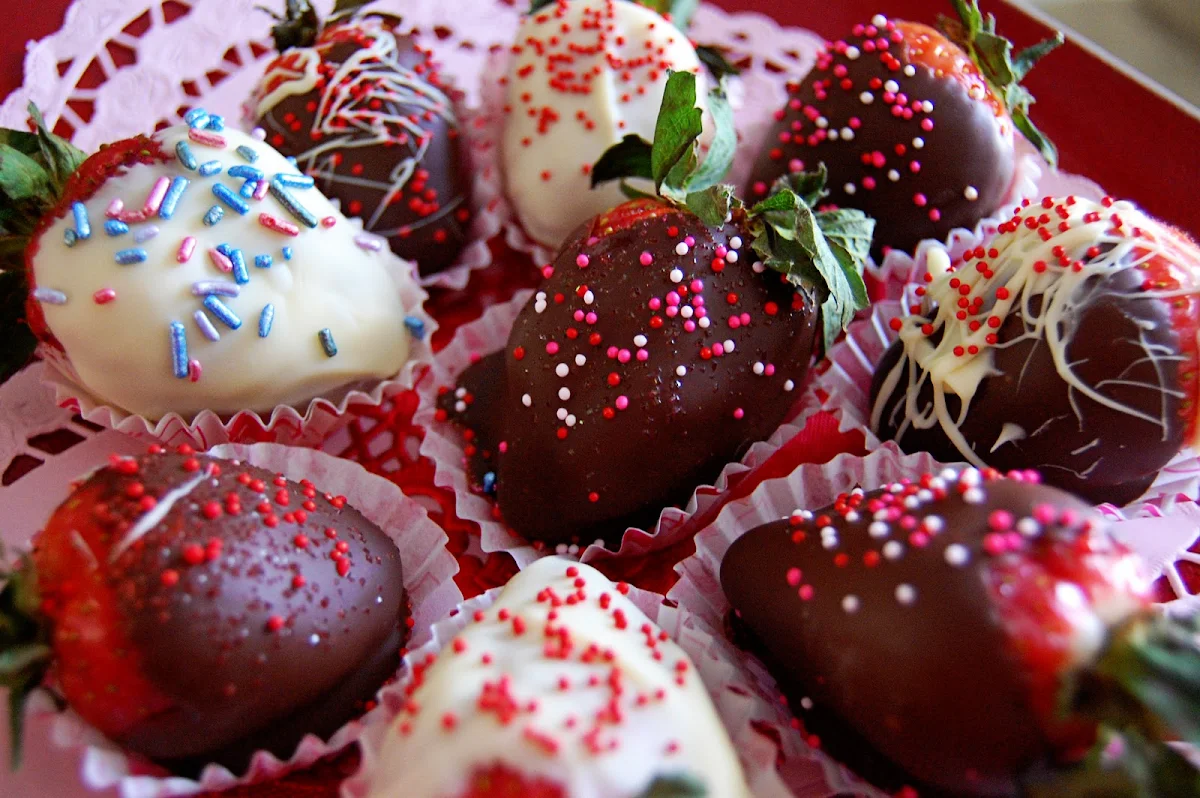
Chocolate covered strawberries — the microwave method, done right
Why Two Identical Batches Come Out Completely Different
Most recipes for microwave chocolate covered strawberries give you a list of ingredients, tell you to melt the chocolate and dip, and leave you to figure out why the results vary so wildly. Batch one turns out with a glossy, snappy shell that shatters satisfyingly on the first bite. Batch two comes out dull, soft, or covered in a white film within hours.
The difference is almost never the recipe. It is the state of the chocolate at the molecular level — and two invisible enemies that most home cooks unknowingly invite into their kitchen every time.
The Crystalline Structure of Chocolate
Chocolate is not a simple food. It is a suspension of cocoa particles, sugar crystals, and milk solids in a fat matrix made of cocoa butter. Cocoa butter is unusual because it can crystallize in six distinct forms, called polymorphs, each with different melting points and textures. Only one of them — called Form V, also known as beta crystals — gives chocolate the gloss, the snap, and the clean melt-in-the-mouth quality you associate with a well-made confection.
When chocolate is manufactured, it goes through a controlled heating and cooling process called tempering specifically to coax the cocoa butter into that Form V crystal structure. When you melt chocolate at home — especially in the microwave — you destroy those crystals. Your job, whether you know it or not, is to encourage the cocoa butter to reform in Form V rather than falling into one of the other five inferior forms.
Why this matters for the microwave method
The microwave at full power generates uneven heat that can push chocolate above 120 degrees Fahrenheit. At that temperature, the cocoa butter breaks down entirely. Melting at 50% power in short intervals keeps the temperature in the range where Form V crystals can still reassemble during cooling — giving you gloss and snap without tempering by hand.
The Two Hidden Enemies: Water and Cold Fruit
The first enemy is water. Chocolate contains roughly 1% moisture. When you introduce even a small additional amount — from a wet bowl, a damp strawberry, or condensation on cold fruit — the sugar in the chocolate dissolves instantly and forms a syrup. This syrup coats the cocoa and fat particles, causing them to clump together rather than flow smoothly. The result is a thick, grainy, irreversible mess called seized chocolate. One drop is enough.
The second enemy is cold fruit. When you dip a strawberry straight from the refrigerator into warm chocolate, two things happen. The temperature difference causes the chocolate to contract rapidly, which creates air pockets between the fruit and the coating. And the cold surface of the fruit causes condensation to form on the outside of the set chocolate as it warms to room temperature — which is the primary cause of sugar bloom, the white, chalky haze that appears on chocolate covered strawberries stored in the fridge.
Choosing the Right Chocolate — What the Label Does Not Tell You
The chocolate aisle can be disorienting when you are looking for something to coat strawberries. Most home cooks reach for chocolate chips because they are convenient, and chocolate chips do work. But understanding what makes chocolate behave differently will help you choose with intention rather than guesswork.
| Chocolate Type | Cacao % | Best For | Notes |
|---|---|---|---|
| Dark chocolate (bar) | 60-70% | Main dip coat | Best flavor balance with tart berries. Easiest to work with. |
| Semi-sweet chips | 45-55% | Everyday use | Contains stabilizers. Needs coconut oil to flow well. |
| Milk chocolate | 30-45% | Sweeter profile | More heat-sensitive. Use 50% power with 20-second intervals. |
| White chocolate | No cocoa solids | Drizzle only | Most heat-sensitive. Watch closely. Seizes faster. |
| Ruby chocolate | Varies | Visual drama | Naturally pink, fruity. Excellent contrast with dark base coat. |
| Compound / candy melts | No cocoa butter | Decoration only | Uses vegetable fat. Sets without tempering. Inferior flavor. |
The stabilizer problem with chocolate chips
Most chocolate chips contain soy lecithin and sometimes additional stabilizers designed to help them hold their chip shape during baking. These stabilizers reduce the fluidity of melted chocolate, which is why dipped strawberries sometimes have thick, uneven coats with ridges. Adding one tablespoon of coconut oil per cup of chips counteracts the stabilizers and restores proper flow consistency.
Why Coconut Oil Is Better Than Butter Here
Both coconut oil and butter thin melted chocolate by adding fat. But butter contains roughly 20% water, while refined coconut oil contains none. In a process where even one drop of water can cause the entire batch to seize, this makes coconut oil the more reliable choice. Refined coconut oil also has a neutral flavor that does not compete with the chocolate. Unrefined coconut oil carries a detectable coconut taste, which works beautifully with dark chocolate but can clash with milk chocolate.
The Strawberry — Lesser Known Facts That Change Your Result
The strawberry is not, botanically speaking, a berry. It is an accessory fruit — the red fleshy part is actually the enlarged receptacle of the flower, and what we call seeds on the outside are the actual individual fruits of the plant, called achenes. Each strawberry contains between 150 and 200 of them.
This distinction matters beyond trivia. The achenes are concentrated sources of ellagic acid and proanthocyanidins — antioxidant compounds with documented anti-inflammatory properties. The flesh itself is rich in pelargonidin, the dominant anthocyanin that gives strawberries their characteristic red color and accounts for a large part of their cardiovascular benefits.
What the Science Says About Strawberries and Health
Strawberries rank among the top sources of phenolic antioxidants across all fruits, with levels that research suggests can be 2 to 11 times higher than other commonly consumed fruits. A 14-week randomized crossover trial published in a peer-reviewed journal found that participants who consumed strawberries showed significant increases in serum antioxidant capacity and measurable decreases in lipid peroxidation — meaning the berries were actively reducing oxidative stress markers in the blood.
The anthocyanins in strawberries have also been linked to prebiotic properties, meaning they can help support the growth of beneficial gut bacteria — a connection between the dessert course and digestive health that no one expects to find.
What does this mean practically for chocolate covered strawberries? Dark chocolate at 60 to 70% cacao adds its own flavanol antioxidants to the mix. The combination is genuinely nutritionally interesting, not merely a rationalization. Each strawberry at 85 calories delivers vitamin C, manganese, folate, and a meaningful hit of dietary antioxidants alongside the chocolate coating.
How to Choose the Best Strawberries for Dipping
Size matters for aesthetics but not for flavor. Larger berries are easier to hold by the stem and create a better chocolate-to-fruit ratio in the finished product. Look for berries that are uniformly red all the way to the stem. Berries with white or green shoulders near the hull were picked before full ripeness and will taste starchy rather than sweet. The green calyx — the leafy cap — should be bright, fresh, and firmly attached. A wilting calyx means the berry has been sitting too long.
Local, in-season strawberries will always outperform imported, out-of-season ones in flavor. Strawberries stop accumulating sugar the moment they are harvested. Unlike bananas or avocados, they do not ripen further after picking. What you buy is what you get. If you can find locally grown berries in season, they transform this recipe from good to extraordinary.
The 45-minute rule
Most recipes say to dry the strawberries. What most recipes do not say is how long. Even a strawberry that looks dry on the outside still carries moisture in its micro-surface textures that is invisible to the eye. A 45-minute air-dry on a clean towel after patting them down eliminates this hidden moisture. It is the single change that most dramatically improves adherence and finish quality.
Microwave Chocolate Covered Strawberries
The complete method — with the science behind each step
Ingredients
- 12 large fresh strawberries with stems, room temperature
- 1 cup (170g) dark or semi-sweet chocolate chips (60-70% cacao)
- 1 tablespoon refined coconut oil (or unsalted butter as second choice)
- 60g white chocolate chips for drizzle (optional)
- Sea salt flakes, crushed pistachios, or freeze-dried raspberry powder (optional toppings)
Equipment
- Deep microwave-safe bowl (deeper is better than wider — keeps chocolate warm longer)
- Parchment-lined baking tray
- Paper towels and a clean kitchen towel
- Instant-read thermometer (optional but helpful)
Instructions
- Wash strawberries gently. Pat each one thoroughly dry with paper towels. Lay them on a clean kitchen towel and leave them at room temperature for at least 45 minutes. Do not skip or shorten this step.
- Place chocolate chips and coconut oil in the deep microwave-safe bowl. The bowl must be completely dry — not just wiped, but properly dry. Any moisture at this stage is a risk.
- Microwave at 50% power for 30 seconds. Remove and stir well. Continue in 20-second intervals at 50% power, stirring thoroughly after each interval. Chocolate is ready when smooth with no visible lumps. This takes approximately 90 seconds total.
- Check the chocolate temperature if you have a thermometer. Ideal dipping temperature is 88 to 92 degrees Fahrenheit (31 to 33 degrees Celsius). If it reads higher, let it cool for a minute while stirring. If lower, add one more 15-second interval at 50% power.
- Hold each strawberry firmly by the green stem. Lower it into the chocolate at a slight angle and rotate slowly to coat evenly up to the shoulder. Lift it out and twist gently over the bowl to let excess drip back in. Do not shake forcefully.
- Place each dipped berry on the parchment-lined tray. If adding sprinkles or crushed toppings, do so now while the chocolate is still wet.
- Leave at room temperature for 20 to 30 minutes to set. If your kitchen is above 77 degrees Fahrenheit, place them in the refrigerator for 10 minutes only, then return to room temperature to finish setting.
- For a white chocolate drizzle, melt white chocolate using the same 50% power method in a separate dry bowl. Transfer to a small zip-lock bag, cut a tiny corner, and drizzle over the set berries. Let the drizzle set for an additional 10 minutes.
Notes
- If chocolate seizes and becomes grainy, add hot cream one tablespoon at a time and stir. This converts it to a ganache consistency that works for drizzling.
- For a thinner, more elegant coat, add an extra half tablespoon of coconut oil to the melted chocolate.
- Ruby chocolate (naturally pink in color) makes a striking visual alternative to white chocolate for the drizzle layer.
- Consume within 24 hours for peak quality. Best eaten at room temperature, not cold from the refrigerator.
Variations That Elevate the Result
The basic microwave chocolate covered strawberry is a complete dessert on its own. But the same technique opens into a wide range of flavor combinations that can match any occasion, season, or audience. The rule is simple: the base coat does the structural work, and the additions do the flavor storytelling.
Matcha White Chocolate
Add half a teaspoon of ceremonial-grade matcha to melted white chocolate before drizzling. The earthy bitterness of matcha balances the sweetness perfectly and creates a visually striking green-on-dark contrast.
Sea Salt and Gold
Flaky sea salt applied immediately after dipping, finished with a brush of edible gold dust once set. Three ingredients beyond the base coat. Maximum visual impact for minimal effort.
Crushed Pistachio
Roll the freshly dipped berry in finely crushed, unsalted pistachios. The nut adds a savory note that cuts the sweetness, a textural contrast, and a vivid green that photographs beautifully.
Freeze-Dried Raspberry
Crush freeze-dried raspberries into a fine powder and roll the dipped berry in it while the chocolate is still wet. The powder adds an intense, tart fruit note that amplifies the flavor of the strawberry beneath.
Espresso and Dark
Add half a teaspoon of instant espresso powder to the melted dark chocolate before dipping. The coffee note deepens the chocolate's complexity without making it taste like coffee. A subtle sophistication.
Chili and Dark
A pinch of cayenne or a quarter teaspoon of smoked chili powder stirred into the melted chocolate adds a slow, building warmth. Start conservatively. You can always add more heat; you cannot take it back.
The base coat does the structural work. The additions do the flavor storytelling. Knowing this changes the way you approach every variation.
Troubleshooting Guide — Every Common Problem Fixed
Chocolate turned thick and grainy after adding coconut oil
White coating appeared on the chocolate after refrigerating
Chocolate is sliding off the strawberries
Chocolate coat is dull and matte, not glossy
The chocolate coat is very thick and uneven
Strawberries are weeping liquid under the chocolate
Storage Rules That Most Articles Get Wrong
The standard advice on the internet is to refrigerate chocolate covered strawberries. This is not wrong, but it is incomplete — and the incomplete version is why so many home cooks end up with chalky, bloomed chocolate and weeping berries the next morning.
The complete picture works like this. Chocolate covered strawberries are genuinely a same-day food. The moment you dip a living fruit in chocolate, a clock starts. The strawberry continues to release moisture from its interior, and that moisture has nowhere to go except toward the interface between the fruit and the chocolate coating. Over time, this weakens the bond and causes the chocolate to bubble and separate from the berry.
| Storage Method | Duration | Result |
|---|---|---|
| Room temperature, cool and dry location, single layer on parchment, uncovered | Up to 12 hours | Best. Full gloss maintained. No condensation. |
| Refrigerator, single layer on parchment, airtight container, not stacked | Up to 48 hours | Good but expect minor condensation on chocolate surface. Bring to room temp before serving. |
| Refrigerator, covered with plastic wrap | Any duration | Avoid. Plastic traps moisture vapor and accelerates sugar bloom. |
| Stacked in a container | Any duration | Avoid. Contact marks and smearing are inevitable. |
| Freezer | Not recommended | Freezing causes cell walls to rupture. Berry becomes mushy on thawing. |
The real rule
Make them the day you serve them. If you need to prepare in advance, dip them no more than 12 hours ahead and store at room temperature in a cool, dry area — between 60 and 68 degrees Fahrenheit is ideal. Refrigerate only if your kitchen is warm, and always remove them from the fridge at least 20 minutes before serving so the chocolate can return to its ideal temperature before eating.
The Nutritional Side of This Dessert — Not What You Expect
Chocolate covered strawberries occupy an unusual position in the dessert landscape. They are genuinely indulgent — dark chocolate and sugar are real calories — but they are also one of the few sweet treats where the main ingredients carry documented functional nutrition.
A fresh strawberry contains vitamin C, folate, potassium, manganese, and a suite of polyphenol antioxidants. The most studied of these is ellagic acid, a polyphenol with anti-inflammatory properties that research has linked to reduced risk of cardiovascular disease and protection of liver, kidney, and skin tissue. The anthocyanins responsible for the red color have been linked in multiple studies to improved endothelial function — the health of the blood vessel lining — which is one of the markers that predicts long-term cardiovascular risk.
The dark chocolate at 60 to 70% cacao adds flavanols — a class of antioxidant found in cocoa that has been associated in clinical trials with improved blood flow, reduced LDL oxidation, and lower blood pressure. Combining strawberry and dark chocolate creates a dessert where the functional compounds in both ingredients are present in meaningful amounts, not just trace quantities.
This does not make chocolate covered strawberries a health food. But it does mean that compared to most desserts of similar caloric content, this one delivers genuine nutritional value alongside the pleasure — which is a distinction worth knowing.
| Per Strawberry (approx.) | Amount | Note |
|---|---|---|
| Calories | 85 kcal | Dark chocolate coat, standard size berry |
| Total fat | 5g | Primarily cocoa butter (stearic acid, oleic acid) |
| Sugars | 8g | Chocolate and fruit combined |
| Dietary fiber | 1g | From strawberry flesh and achenes |
| Vitamin C | ~8mg | Roughly 9% of daily recommended intake |
| Flavanols | Present | From 60-70% dark chocolate |
| Ellagic acid | Present | Concentrated in achenes (the exterior seeds) |
Frequently Asked Questions
Why is my chocolate not sticking to the strawberries?
The most common cause is surface moisture. Even invisible moisture on the berry surface will cause melted chocolate to repel rather than adhere. Ensure your strawberries are completely dry and at room temperature. Also check that your chocolate is not too hot — chocolate above 100 degrees Fahrenheit becomes too thin to coat properly and will slide off rather than cling.
Why did my chocolate covered strawberries turn white overnight?
This is chocolate bloom. Fat bloom happens when unstable cocoa butter crystals migrate to the surface, creating a white or gray film. Sugar bloom happens when refrigerator condensation dissolves and redeposits surface sugar as a white powder. Both are prevented by letting the chocolate set at room temperature rather than rushing it into the fridge. Bloomed chocolate is safe to eat — it is purely a visual and textural issue, not a safety concern.
How long do chocolate covered strawberries last?
At room temperature in a cool, dry spot, they hold well for up to 12 hours. Refrigerated in a single layer on parchment inside an airtight container — not stacked and not covered in plastic wrap — they last up to 48 hours, though minor condensation on the chocolate surface is almost inevitable. They are best consumed the same day they are made, ideally within a few hours of dipping.
Can you use chocolate chips instead of bar chocolate?
Yes, chocolate chips work well in the microwave method. They contain stabilizers that slightly thicken the melted chocolate, so adding one tablespoon of coconut oil per cup restores good flow consistency. High-quality bar chocolate with 60 to 70% cacao content produces a more professional finish and better flavor, but chips are a practical choice for everyday use.
Is a microwave or double boiler better for melting chocolate?
Both work well. The microwave at 50% power in short intervals is faster and requires less equipment. The double boiler gives gentler, more consistent heat and is more forgiving for beginners. For quantities under two cups of chocolate chips, the microwave method at 50% power is efficient and produces excellent results when stirred thoroughly between each interval.
What chocolate percentage is best for covering strawberries?
Dark chocolate with 60 to 70% cacao content is the most versatile choice. The slight bitterness of cacao at that percentage balances the natural tartness and sweetness of fresh strawberries in a way that lower-percentage chocolates cannot achieve. For those who prefer a sweeter result, milk chocolate at 35 to 45% works well. White chocolate, while beautiful for decorative drizzles, requires the tightest temperature management of the three.
Can you make chocolate covered strawberries the night before?
You can, but quality drops overnight. The strawberry continues releasing moisture after dipping, which gradually weakens the bond between fruit and coating. If you need to prepare ahead, dip them no more than 12 hours before serving and store at room temperature in a cool, dry spot. If refrigerating overnight, use a parchment-lined airtight container, keep them in a single layer, and bring them to room temperature for 20 minutes before serving.
Why does chocolate seize in the microwave?
Chocolate seizes when a small amount of liquid contacts melted chocolate. The liquid causes the sugar particles to dissolve, forming a syrup that coats the cocoa and fat particles and forces them to clump into a grainy, stiff paste. Using a completely dry bowl, a dry spoon, and dry strawberries prevents this. Paradoxically, adding significantly more liquid — at least one tablespoon of hot cream per ounce of chocolate — can rescue seized chocolate by creating a smooth ganache consistency.
Equipment Worth Having
You do not need special equipment to make excellent chocolate covered strawberries. But a few items make the process measurably easier and improve the results.
A deep, narrow microwave-safe bowl
Deeper than it is wide keeps the chocolate warm longer during the dipping process and makes it easier to coat the berry fully in one dip without multiple passes.
An instant-read thermometer
Optional but transformative. Knowing that your chocolate is at 90 degrees rather than guessing eliminates one of the main variables behind inconsistent results. The ideal dipping window is 88 to 92 degrees Fahrenheit.
Parchment paper, not wax paper
Wax paper can stick slightly and sometimes transfers a waxy residue. Parchment releases cleanly every time and leaves the base of the strawberry smooth rather than marred by paper transfer.
A clean kitchen towel for air-drying
Paper towels can leave fibers on the berry surface. After the initial pat-dry with paper towels, a clean cloth towel as the surface for the 45-minute air-dry produces a cleaner result.




.jpg)
