Easy and Delicious Pumpkin Pie Recipe
A New England farmhouse, a wood stove that never quite kept an even heat, and a grandmother's trick that no cookbook ever printed. This is the pumpkin pie I learned standing at a kitchen counter with flour on my sleeves and the whole valley smelling of clove.
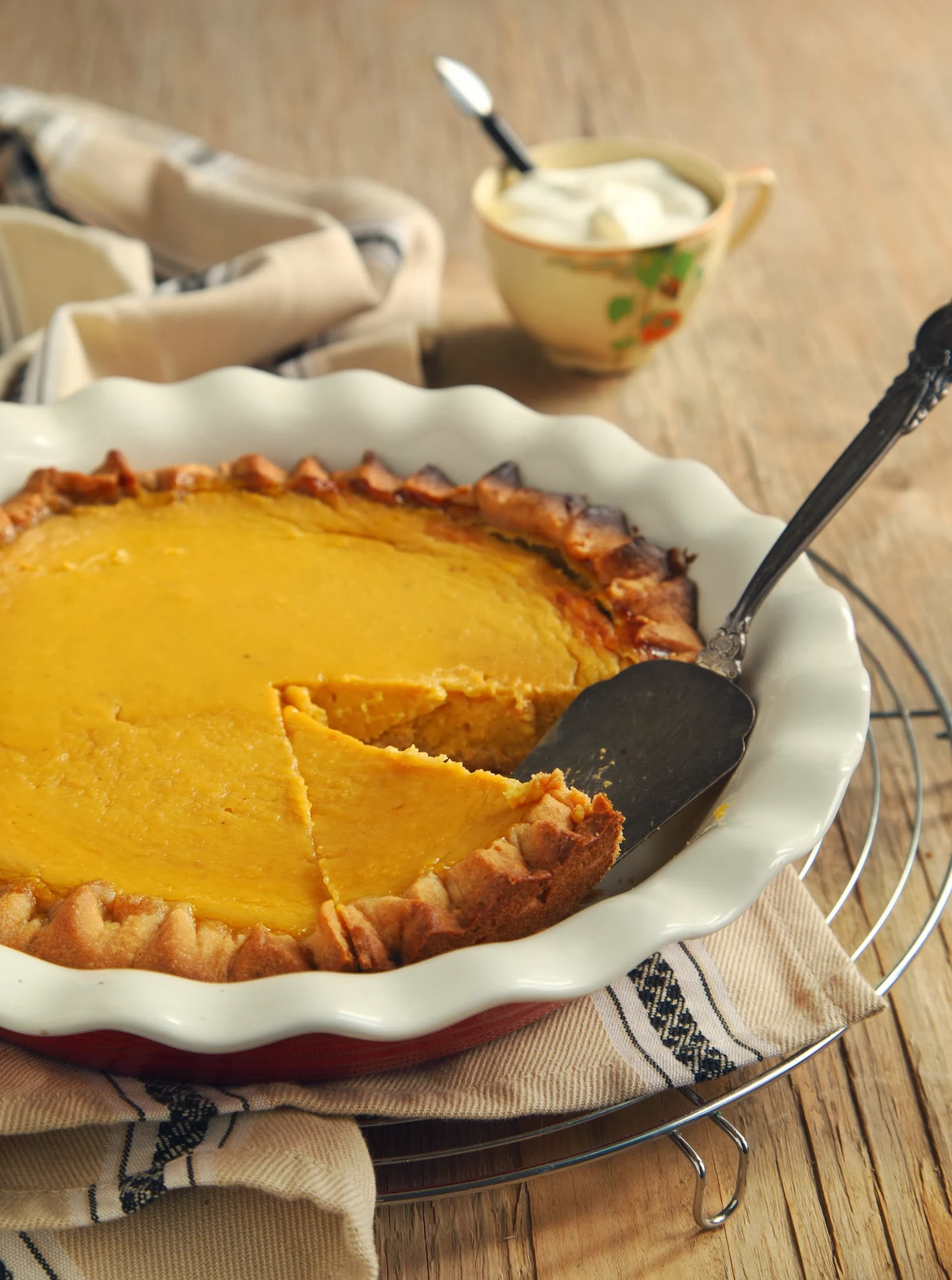
The Kitchen Where It Began
I got to Martha's place a little past four in the afternoon, when the light in Vermont turns the colour of steeped tea and every ridge along the road looks like it has been dipped in rust. Her farmhouse sat back from the lane behind a stand of sugar maples that had already dropped half their leaves, and the smell reached me before she opened the door. Woodsmoke first, curling thin and grey from the chimney. Then cinnamon, sharp and a little sneezy the way it gets when it hits hot butter. Then something deeper underneath both of those, almost like burnt sugar and wet October earth mixed together. That third smell, she told me later, was the pumpkin itself, roasting slow in her oven with the skin still on, its edges going dark and faintly caramelised where the flesh met the pan.
Martha is seventy one and has made this pie every October since she was nine years old, taught at her own grandmother's elbow in a kitchen that did not have running water until 1958. Her kitchen still smells the way a kitchen is supposed to smell in the second week of October, part clove, part toasted flour, part the cold mineral tang of the air that leaks in under the back door. She still uses the same enamel bowl, chipped at one edge, that her grandmother used, and she still refuses to measure the spices with a spoon. When I asked her why, she rubbed a pinch of cinnamon between her fingers and said her grandmother always told her a spoon lies to you but your nose never does.
We sat at her table while the pumpkin roasted, steam fogging the little window over the sink, and she told me the whole thing in pieces, the way stories come out when someone is also stirring a pot and checking a fire. There was cider mulling on the back burner, and every so often she would lean over and breathe it in with her eyes closed, like she was checking on an old friend. What follows is her pie, told mostly in her words, with the parts of the history she was curious about filled in from the old county records and the church cookbooks she keeps in a tin box on top of the icebox.
My grandmother used to say a pumpkin pie made without a story is just a custard that got lucky.
Why Pumpkin Became a Pie at All
Long before anyone in New England owned an oven that could hold a steady heat, the people who actually knew what to do with a pumpkin were the Wampanoag and other Native communities of the Northeast. They had been growing and cooking pumpkins for thousands of years, roasting the flesh on hot coals, drying it into strips for winter, and mixing it with maple sap for sweetness. When English colonists arrived and their wheat crops struggled in unfamiliar soil, it was this local knowledge that kept entire settlements fed through their first brutal winters.
The very first pumpkin pies were not pies in any shape we would recognise. Colonists would slice the top off a whole pumpkin, scoop the seeds, pour in milk, honey and whatever spice they had managed to bring across the Atlantic, then set the whole thing directly into the hot ashes of the hearth to bake. There was no crust at all. It came out closer to a baked pudding still sitting inside its own shell than to anything on a modern dessert table.
Martha's favourite detail, the one she always tells with a laugh, is that pumpkin pie almost got left behind entirely. A Massachusetts ship captain named Edward Johnson wrote in 1654 that as the colonies grew wealthier, families started wanting apples, pears and English fruit tarts instead of their humble pumpkin pies. For a while, the pumpkin was considered food for lean years, something you served when you could not afford better. It took the printed cookbooks of the following century, especially Amelia Simmons's 1796 American Cookery, the very first cookbook written and published on American soil, to give pumpkin pie the recipe and the respectability that finally made it a fixture of the harvest table rather than a fallback.
There is also a small piece of word history that Martha finds funnier than she probably should. The word pumpkin travelled a long road before it landed in English. It began with the Greek pepon, meaning something like ripened by the sun, became pompon in French, then pumpion in English, the very word Shakespeare used in The Merry Wives of Windsor. Only later did it soften into the pumpkin we say today.
The Secrets Grandmother Never Wrote Down
Martha's real recipe lives more in her hands than on paper, and it took a lot of prodding over that kitchen table to get the parts that matter most, the ones you will not find printed in the family church cookbook because everybody who wrote those recipes assumed you would already know.
She never uses canned pumpkin straight from the tin without draining it
Canned pumpkin, even the plain purée kind, holds far more water than people realise. Martha's trick, passed down from her mother, is to tip the purée into a fine cloth set over a bowl and let it sit for a full hour, sometimes overnight in the icebox, so the excess water weeps out on its own. Skip this step and you get the thin, weeping pie that so many home bakers complain about online without ever knowing why it happens.
The nose test replaces the recipe card
Rather than measuring cinnamon, ginger, nutmeg and clove with spoons, Martha mixes them in her palm and smells the blend before it goes anywhere near the bowl. If it does not smell like the inside of her grandmother's spice tin, she adjusts on instinct. It sounds unscientific, and it is, but it is also the exact reason her pie tastes different from the flat, one note spice mix sold premixed in stores.
A splash of something unexpected goes into the custard
This is the part food forums have only recently caught up to, decades after farmhouse kitchens like Martha's figured it out through trial and error. A small spoon of good mayonnaise, whisked into the custard along with the eggs, adds both fat and a touch of acidity that keeps the filling silkier and less likely to crack as it cools. Martha's grandmother never called it mayonnaise. She called it the emulsion trick, made her own egg and oil blend by hand, and would have been baffled to learn that food bloggers are now treating it as a discovery.
The pie is baked twice, in two different heats
Martha starts her oven hot, closer to 425 degrees Fahrenheit, for the first quarter of an hour to set the very edge of the crust and the outer ring of custard quickly. Then she drops the heat right down to around 325 and lets the centre finish slowly. This two stage bake is the single biggest reason her custard never splits or weeps, and it is a trick most modern recipe cards skip entirely in favour of one flat temperature.
The pie is never sliced the same day
Every single person at Martha's table has, at some point, tried to sneak a slice while the pie is still warm, and every single time she has swatted the knife away. A pumpkin custard keeps setting as it cools, and the full flavour of the spices only blooms after a full night in a cold room. Cut it warm and you get a soft, almost runny centre and a flatter taste. Wait until the next morning and the whole character of the pie changes, the clove pulling forward, the nutmeg softening into the background where it belongs.
A pinch of black pepper, not more sugar, is the fix for a flat tasting pie
This one Martha picked up decades ago from an older neighbour who swore by it, and it turns up again and again in the comment sections of old church fundraiser cookbooks and, more recently, in the reviews under nearly every well loved pumpkin pie recipe shared on home baking forums. A single small pinch of black pepper, whisked in with the other spices, does something sugar alone cannot. It does not make the pie taste peppery. Nobody at the table will guess what it is. It simply wakes the other spices up, the way a squeeze of lemon wakes up a soup, and gives the whole filling a faint, warm heat that lingers just behind the clove.
Puree and pie filling are not the same can, and mixing them up ruins the balance
One mix up shows up constantly in home kitchens and in online recipe reviews, and it is worth clearing up here. Plain pumpkin purée is nothing but cooked, strained pumpkin, no sugar, no spice. Pumpkin pie filling, sometimes called pumpkin pie mix, already has sugar and spices blended in at the factory. Grab the wrong can and your pie ends up either painfully sweet or strangely flat, and no amount of extra cinnamon at the mixing bowl will fully fix it afterward. Martha keeps a strip of masking tape over her pantry shelf that simply says plain only, a habit from the one Thanksgiving her sister grabbed the wrong can in the dark.
A Thing Most Visitors Miss
If you ever get the chance to taste a truly old fashioned New England pumpkin pie, look for one made with fresh roasted sugar pumpkin rather than tinned purée. The flesh is stringier and less uniform, but the flavour carries a faint smokiness from the roasting that tinned purée simply cannot replicate, and it is exactly the flavour early colonial households would have known. Kitchens that have tested both side by side, fresh against canned, generally find the fresh version a little less sweet and a touch more vegetal, but noticeably richer once it is baked into a custard rather than eaten on its own.
Martha's Rustic Farmhouse Pumpkin Pie
What You Need
- 1 unbaked 9 inch pie crust, chilled
- 2 cups roasted sugar pumpkin flesh, drained, or 1 can (15 oz) pumpkin purée, drained
- 3 large eggs
- 1 tablespoon good mayonnaise
- 3/4 cup packed brown sugar
- 1 cup heavy cream
- 1/2 cup whole milk
- 1 1/2 teaspoons ground cinnamon
- 1/2 teaspoon ground ginger
- 1/2 teaspoon ground nutmeg, freshly grated if possible
- 1/4 teaspoon ground cloves
- 1/2 teaspoon fine salt
- 1 teaspoon vanilla extract
- 1 small pinch black pepper
How Martha Makes It
- Drain the pumpkin over a cloth set in a bowl for at least an hour to pull out excess water.
- Roll the chilled crust into a 9 inch pie dish, crimp the edge, and return it to the fridge while you make the filling.
- Preheat the oven to 425 degrees Fahrenheit.
- Whisk the eggs and mayonnaise together first until fully smooth, then whisk in the drained pumpkin and brown sugar.
- Stir in the cream, milk, cinnamon, ginger, nutmeg, cloves, salt, vanilla and black pepper until the mixture is completely even, with no streaks.
- Pour the filling into the chilled crust and set it on the middle oven rack.
- Bake at 425 degrees for 15 minutes, then lower the heat to 325 degrees without opening the door, and continue baking for 35 to 40 minutes more, until the outer two inches are set and the centre still holds a gentle wobble.
- Cool the pie on a wire rack for two hours at room temperature, then move it uncovered to the fridge overnight before slicing.
Notes From the Kitchen
If your crust edge browns too fast during the first hot bake, cover just the rim loosely with a strip of foil. A pie that jiggles like a full wave in the centre when nudged is underdone. A pie that jiggles like a firm wobble is exactly right, since it will keep setting as it cools.
Fixing a Cracked or Watery Pie
Even Martha has had pies go wrong, and she is refreshingly honest about it. A cracked top almost always means the oven ran too hot for too long near the end, so the outer custard set and shrank while the centre was still catching up. Lowering the heat for the second stage of baking, exactly as in the recipe above, is the single best fix. A watery, weeping pie almost always traces back to unstrained pumpkin, which is why the first step of draining the purée matters more than any spice in the whole recipe.
Beyond the basics: Bakers who blind bake their crust for eight to ten minutes before adding filling get a noticeably crisper bottom crust, since it prevents the raw dough from absorbing moisture from the custard while baking. An instant read thermometer pulled from the pantry drawer is also the most reliable way to judge doneness, since a properly set custard reads close to 175 degrees Fahrenheit at the centre, well before visual cues become obvious.
Fast Facts Worth Knowing
What Martha Serves Alongside It
A pie this rich does not need much dressed up beside it, and Martha is almost stubborn about keeping the plate simple. A spoon of softly whipped cream, barely sweetened, so it melts against the warm spice instead of fighting it. Sometimes a scatter of candied pecans if her sister has brought a jar over from her own kitchen. For the table itself, she leans on the same drink that filled the house that afternoon, cider mulled slow on the back burner with a cinnamon stick and a few cloves stuck into a slice of orange peel, the kind of drink that makes a cold porch bearable once the sun drops behind the ridge.
If you are planning a full autumn spread around this pie, the same warm, clove forward flavours carry through beautifully into a roast squash side dish, a maple glazed ham, or even a simple bowl of spiced apple crisp for anyone who wants a second dessert once the pumpkin pie plates have been cleared. Coffee, strong and a little bitter, is the other pairing Martha swears by, since it cuts straight through the sweetness of the custard the way cream alone cannot.
Keeping It Fresh, and Freezing It Ahead
Because of the eggs and dairy in the custard, a finished pumpkin pie belongs in the refrigerator, loosely tented with foil or plastic wrap so the surface does not pick up other smells from the fridge. Kept this way, it holds its texture and flavour well for four to five days, though in Martha's house it rarely survives past the second.
The pie also freezes better than most people expect, which makes it a genuinely useful thing to know if you like to get ahead of a busy holiday week. Once it has cooled completely and set overnight in the fridge, wrap it tightly, first in plastic wrap pressed directly against the surface, then in a layer of foil, and it will keep in the freezer for up to a month without losing its character. Thaw it slowly overnight in the refrigerator rather than on the counter, since a slow thaw keeps the custard from weeping the way a fast one can. Martha has even frozen the plain, unbaked crust ahead of time, then made the filling fresh the morning she needs it, which saves a good hour of work on the busiest cooking day of the year.
By the time Martha pulled that first pie from her oven, the whole downstairs of the farmhouse smelled the way I imagine every October in that valley has smelled for two hundred years, clove and woodsmoke and something faintly caramelised hanging low over the kitchen table. It is not a complicated dessert, not once you understand the handful of small habits that separate a flat, forgettable pie from the kind people ask about years later. Draining the pumpkin, the two stage bake, the overnight rest, the pinch of black pepper hiding in the spice tin, and yes, that spoon of mayonnaise her grandmother never had a modern name for. That is the whole secret, really. Nothing dramatic. Just a farmhouse full of small, patient corrections passed down at a kitchen table, one October at a time.