Vaikunta Ekadasi Celebrations Across Vishnu Temples
A decade of chasing one opened gate across South India, from the Paramapada Vasal at Srirangam to a wobbly forest trek at Ahobilam, and what each stop quietly taught me about waiting.
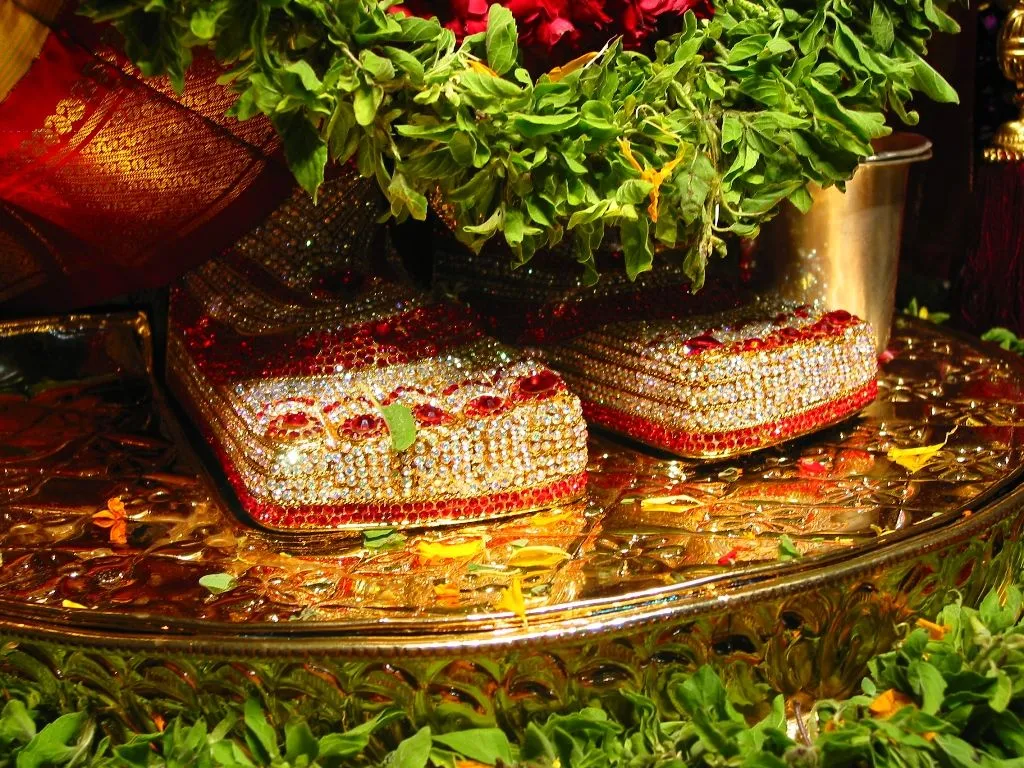
My grandmother sat through eleven straight hours at Srirangam once, refusing every offer of a plastic stool, because in her words the door only opens one day a year and your knees can rest for the other three hundred and sixty four. I did not understand that sentence the first time I heard it. I understand it a little better after twelve winters of showing up, temple after temple, on the one day the Vaishnava calendar treats differently from every other day of the year. Vaikunta Ekadasi, or Mukkoti Ekadasi if you grew up in Karnataka, or Swargavathil Ekadasi if your family is from Kerala, marks the day tradition holds open a northern gateway into Vishnu's own heaven, Vaikuntha. Walk through it, even symbolically, and the belief is that a soul is spared an entire cycle of further births. It is a large promise resting on a single doorway, and I wanted to see what that doorway actually looked like in as many places as I could reach.
This piece grew out of that habit of showing up. Some years I went with my mother, who fasted the whole day on nothing but boiled sweet potato and refused all my offers of coffee. Some years I went alone with a torch, a notebook, and a stubborn refusal to leave before the last recitation ended. What sits below is not a summary borrowed from other people's write ups, and it deliberately skips the parts every other guide already repeats, exact opening hours, ticket prices, how to reach the nearest airport. Instead it carries the myths as local priests and family elders actually tell them, the small quarrels between one telling of a legend and another, the food that shows up only in these weeks, and the specific way each of these twelve temples turns strange and luminous for one single night that the rest of the calendar does not get.
Why the date itself is not as fixed as most articles claim
Every year I get at least one message from a reader who arrived a day early or a day late, and it is rarely their fault. Tamil Nadu, Andhra Pradesh and Karnataka calculate the lunar month using the Amanta system, counting from one new moon to the next, while several North Indian panchangs use the Purnimanta system, counting from full moon to full moon. The Ekadasi tithi can therefore fall a full calendar day apart depending on whose almanac a particular temple trust follows, and the gap widens further when a tithi begins or ends close to sunrise, since the temple's ritual day and the printed calendar date can then disagree. My own rule after years of getting this wrong is boring but reliable, I call the temple's own helpline or check its own website listing two weeks out, and I never trust a generic national festival calendar for the exact date at a specific shrine.
Watching from home, for the years the journey is not possible
Not every year allows for the travel, and I have spent at least three Vaikunta Ekadasis watching from my own living room rather than standing in a queue. Tirumala is by far the easiest of the twelve to follow remotely. TTD's own devotional channel, SVBC, runs a continuous live stream of the day's rituals on its YouTube channel and satellite feed, including the Vaikunta Dwara Darshanam and the following morning's Chakrasnanam, and the TTD Seva App adds notifications and virtual seva booking on top of that feed. Several of the Tamil Nadu Divya Desams under the state's Hindu Religious and Charitable Endowments department, Srirangam included, now run their own YouTube live coverage of the Adhyayanotsavam nights, though the quality and camera placement varies considerably from temple to temple and year to year, so I would treat this as a bonus rather than something to plan an entire evening around. Smaller temples on this list, Oppiliappan koil and Srirangapatna among them, rarely offer any live coverage at all, which if anything reinforces how different their whole atmosphere is from the broadcast heavy experience at Tirumala.
01Sri Ranganathaswamy Temple, SrirangamThe night the thousand pillared hall refuses to go quiet
Tiruchirapalli, Tamil Nadu, on the island cradled between the Kaveri and Kollidam rivers
You hear Srirangam before you see it. Past three in the morning, a wall of chanting rolls out of the thousand pillared hall and it never really stops, it only changes key as one reciter hands the verse to the next. My first year here I made the mistake every newcomer makes, arriving on the calendar date itself expecting a four in the morning start to be early enough. It was not. What almost no visitor realises before their first trip is that the single date marked on a calendar is only the peak of something much longer, a twenty one day recitation festival called Adhyayanotsavam, split into ten daytime sessions known as Pagal Pathu and ten night sessions known as Ira Pathu, with Vaikunta Ekadasi landing squarely inside the second half.
Srirangam's founding legend, and how it explains the south facing god
Every priest at Srirangam will eventually tell you some version of the same origin story, though the details shift depending on who is telling it. Brahma is said to have received the image of reclining Ranganatha during deep meditation, and passed it down through a line that eventually reached Rama. After the war in Lanka, Rama gifted the idol to Vibhishana, Ravana's own brother, who had sided with him out of conviction rather than convenience. Carrying it home on his head, Vibhishana paused on the banks of the Kaveri to bathe and pray, setting the idol down on the ground for a moment. When he tried to lift it again, it would not move, fixed to the earth as though it had chosen its resting place on its own. Ranganatha is said to have then told the grieving Vibhishana that he would remain here forever, but as a consolation, he would always keep his gaze turned south, toward Lanka, which is why the deity today lies facing south rather than the more common east or west orientation seen at most other Vishnu temples. A second, older strand of the story adds a mischievous detail rarely printed in tourist pamphlets, that the very ground where the idol settled was later lost to dense forest for centuries, rediscovered only when a Chola king chasing a runaway parrot stumbled onto the site and had the surrounding jungle cleared to build what eventually became the largest functioning temple complex on earth.
Srirangam's Araiyar Sevai, and why an entire family has guarded one dance for centuries
The performance tradition that anchors these twenty one days is called Araiyar Sevai, and it survives today largely because a small number of hereditary families have kept its choreography intact for close to a thousand years. The Araiyar sings verses from Nammazhwar's Tiruvaimozhi while performing abhinaya, precise hand and eye gestures borrowed from classical dance grammar, and tradition holds that the deity himself responds through specific gaits during the recitation, simha gathi imitating a lion emerging from its den, sarpa gathi the glide of a serpent, rishabha gathi the gait of a bull. An elderly member of one Araiyar family once told me, without any drama in his voice, that the actual difficulty of the performance has nothing to do with the footwork. It lies in singing an entire Tiruvaimozhi decad without a single audible gasp for breath, because letting your own body interrupt Nammazhwar's grief mid verse would be, in his phrase, an insult to a poet who has been dead for over a thousand years and can no longer defend his own lines.
He also told me something that never made it into any book I later checked, that certain verses are deliberately sung slower during the Ira Pathu nights than during the Pagal Pathu days, not for any theatrical reason but because the temple believes the god listens differently at night, with less distraction, and a rushed verse at that hour is considered close to disrespect.
Srirangam's Paramapada Vasal, and what actually happens when it swings open at dawn
The moment every visitor waits for is the opening of the Paramapada Vasal, the doorway to the eternal abode, near dawn on Ekadasi morning. Namperumal, dressed in Muthangi Alankaram, an ornamentation woven entirely from strung pearls, is carried through a sequence of ceremonial steps called Karpura Sevai toward the Thousand Pillared Mandapam, and the northern doorway is finally thrown open as the crowd's chanting reaches its loudest pitch of the entire festival. What surprises most first time visitors is learning that physically stepping through the doorway is neither guaranteed nor, according to temple elders, even the actual point. The spiritual weight of the moment, they insist, comes from presence and recitation, from being packed shoulder to shoulder with thousands of strangers all reciting the same verse at the same second, not from squeezing bodily through a fifteen foot gap.
Srirangam's Chinna Kadai Street, where the coffee gets stronger and the fritters get better
Food outside the temple turns into its own small festival during these weeks. Stalls along Chinna Kadai Street brew filter coffee thick enough to leave a spoon standing, and prasadam counters distribute Pongal, curd rice, and a lemon rice sharp enough to jolt anyone awake faster than caffeine manages to. If you are fasting through the day, break it the way regulars do, with a small plate of pazham pori, banana fritters fried by a vendor near the Amma Mandapam whose family has apparently manned the same cart for three generations, using a batter recipe none of them will fully disclose.
02Sri Venkateswara Temple, TirumalaStanding in the human tide
Tirumala hills above Tirupati, Andhra Pradesh
Tirumala on Vaikunta Ekadasi is not a temple visit so much as a controlled human tide, and I say that having stood inside it three separate years and having, once, deliberately chosen to skip it after reading how badly a token distribution crush had gone in a previous season. That detail rarely makes it into cheerful travel writing, but it matters more than any description of the alankaram. If you are travelling with elderly parents or small children, this is the one temple on the entire circuit where I would genuinely suggest considering Vaikunta Dwadasi, the day immediately after, when the special darshan window is often still open with a marginally thinner crowd.
Tirumala's Vaikunta Dwaram, a doorway that stays curtained for three hundred and sixty four days
The Vaikunta Dwaram sits directly beside the main sanctum, a doorway that most pilgrims on an ordinary day never even notice, since it remains permanently curtained. According to temple tradition, this gateway represents the very entrance to Vishnu's celestial abode, and its opening on this single day each year is treated as a literal, physical reenactment of the belief that Vaikuntha itself briefly touches the earth at Tirumala. Devotees who pass through it also walk past the Bangaru Vakili, the temple's golden doorway, a vantage point on the deity that the ordinary Sarva Darshan queue never offers on any other day.
Tirumala's Chakrasnanam at first light, and the quieter side of the tank locals actually use
The morning after the main darshan brings Chakrasnanam, when the Sudarshana Chakra is carried down to Swami Pushkarini for a ceremonial bath as the sky is still turning grey. Almost nobody outside dedicated Tirupati forums mentions that the best vantage point for this particular ritual is not the main ghat steps, where every camera in the crowd is already pointed, but the northern edge of the tank near the smaller mandapams, where crowd barricades tend to be thinner simply because most visitors default to the obvious side without checking.
The prasadam worth genuinely looking forward to here is not the famous laddu everyone already expects, it is the simple pulihora, tamarind rice, distributed at the smaller queues, sharp with mustard seed and curry leaf, built for exactly the kind of long, stationary, overnight wait this festival demands of anyone attempting it properly.
03Sri Parthasarathy Temple, TriplicaneAn intimate procession through narrow lanes
Chennai, Tamil Nadu, beside the now dry bed of the old Kairavani tank
Triplicane on Vaikunta Ekadasi feels almost domestic after the scale of Tirumala, and that intimacy is exactly why I keep returning. This is one of the few Divya Desams where Krishna is worshipped specifically as Parthasarathy, Arjuna's charioteer on the battlefield of Kurukshetra, and sculptors here are said to have deliberately preserved battle scars on the deity's cheek rather than smoothing them away, a detail meant to remind worshippers that this Krishna chose to stand in the middle of a war rather than above it.
Triplicane's dry tank, and why it still matters to a neighbourhood that has moved on from it
The temple's own tank once fed irrigation channels across the old city, and elderly Triplicane residents still describe drawing water from it as children, decades before it silted over and the surrounding wards grew up around a dry basin instead of a working reservoir. That single change, water to no water, quietly rewrote how the whole neighbourhood organises festival crowds today, since the open ground around the former tank now doubles as overflow space for Ekadasi processions that would once have had to route around a full basin of water.
Vendors along Triplicane High Road sell vada curry the way only this particular neighbourhood does, a thick lentil fritter gravy that most Chennai food writing credits, incorrectly according to local stall owners, to Kerala Muslim cuisine rather than to Triplicane's own long standing version, which several vendor families insist predates that crossover claim by generations. Triplicane is also home to one of Chennai's oldest Shia Muslim neighbourhoods, and during these same December weeks the festive lighting around Big Mosque Street often overlaps visually with the temple's own decorations, a coexistence locals treat as entirely unremarkable, which tells you more about the actual character of the neighbourhood than any single guidebook paragraph could.
04Sri Sita Ramachandra Swamy Temple, BhadrachalamA prisoner's hymn and a river crossing
On the banks of the Godavari, Telangana
Bhadrachalam is technically a Rama temple rather than a Divya Desam in the strict Vaishnavite classification, yet it observes its own twenty one day Adhyayanotsavam and opens a Vaikuntha Dwaram of its own, a detail that genuinely surprises visitors who assume this specific festival belongs exclusively to Ranganatha and Venkateswara shrines.
Bhadrachalam's Bhakta Ramadasu, a tax collector who spent public money on gold and sang his way out of prison
The temple's defining story belongs to Kancharla Gopanna, remembered today as Bhakta Ramadasu, a seventeenth century tax official under the Golconda sultanate who diverted government treasury funds to commission gold ornaments for Rama and Sita without royal permission. For this he was imprisoned, and tradition holds that he composed many of Telugu devotional music's most enduring keerthanas from inside that very cell, songs still sung at the temple today during festival recitations. Local legend adds that Rama and Lakshmana themselves eventually appeared before the ruler in disguise, repaying the diverted funds and securing Ramadasu's release, a story that blurs, deliberately, the line between a bureaucrat's genuine devotion and a miracle nobody can independently verify.
What almost no first page article mentions is the small boat crossing available during these weeks, simple country boats that ferry pilgrims to a shoal on the opposite bank of the Godavari where tradition holds Rama, Sita and Lakshmana once camped during their forest exile. The ride takes about five minutes, costs next to nothing, and delivers the single best photograph of the temple gopuram reflected in the river at dawn, a shot that outclasses every straight on facade photo already circulating online for this temple.
05Sree Padmanabhaswamy Temple, ThiruvananthapuramThree doors, and one impossibly long deity
Fort area, Thiruvananthapuram, Kerala
Padmanabhaswamy operates in an entirely different register from the rest of this list. The deity reclines on Anantha the serpent in a form so large that it can only be viewed through three separate doors, each one framing a different section of the eighteen foot image, the face through the first, the navel with an emerging Brahma through the second, the feet through the third. Entry rules here are stricter than anywhere else on this route, a dhoti and angavastram required of men with no substitutions accepted for fabric or fastening style, and the temple's own trust enforces this with a firmness that catches unprepared visitors off guard every single festival season.
Padmanabhaswamy's royal family, still serving as the deity's own attendants
Kerala's version of this festival carries a distinct local name in everyday conversation, Swargavathil Ekadasi, gate of heaven day, and Thiruvananthapuram's own celebration draws Malayali families who treat it as an occasion for multi generational visits rather than a single hurried dash. What most standard blogs skip entirely is the temple's ongoing connection to the erstwhile Travancore royal family, who still hold ceremonial roles as Padmanabhadasa, meaning servants of the deity, a title that has persisted even after the formal abolition of princely privileges decades ago. This is not a symbolic footnote. Specific families are still given precedence at specific points in the ritual sequence during major festivals, a protocol rooted in centuries of temple administration rather than any modern social hierarchy, and watching for it closely during the Ekadasi procession reveals a layer of history that most visitors walk straight past.
06Sri Varadharaja Perumal Temple, KanchipuramWhere silk looms pause for the morning
Kanchipuram, Tamil Nadu
Kanchipuram splits its devotional identity between Shiva and Vishnu temples with an ease that visitors from other regions sometimes find puzzling, and Varadharaja Perumal anchors the Vishnu half of that identity. What struck me most on my first visit was not the temple architecture but the town's daily rhythm around it. Silk weaving families from the surrounding lanes time their own schedule around temple observances, closing looms for the Ekadasi morning procession before returning to weave through the afternoon, a habit born not from any formal temple rule but from generations of quiet custom.
Kanchipuram's Athi Varadar, the wooden deity that surfaces only once every forty years
Ask almost any Kanchipuram resident about this temple and within minutes they will bring up Athi Varadar, a sculpture carved from fig tree wood normally kept submerged in the temple's tank and brought out for public viewing only once every forty years, an event so rare that most residents will witness it just two or three times across an entire lifetime. It has no direct connection to Vaikunta Ekadasi, yet the two rituals sit at opposite ends of how this temple measures time, one marking a single night that repeats every year without fail, the other marking a wait so long it outlasts most human memories of the previous occurrence.
07Sri Oppiliappan Temple, ThirunageswaramA wedding feast cooked without salt
Near Kumbakonam, Tamil Nadu
This is the temple that reshaped how I understood the entire festival, mostly because of an early morning conversation with a priest who had nowhere else to be. Oppiliappan is smaller and considerably quieter than Srirangam or Tirumala, and its Vaikunta Ekadasi observance feels closer to what this ritual might have looked like before scale changed everything else about it.
Oppiliappan koil's naivedyam, and why every single dish here is made without salt
The temple's most distinctive tradition has nothing directly to do with Vaikunta Ekadasi and everything to do with a wedding. According to the legend told here, Bhoodevi, the earth goddess, appeared as a young girl raised by the sage Markandeya after he prayed for a child, and when Vishnu came to marry her the ceremony was arranged in such haste that the wedding feast went out without salt in any of the dishes. The temple has maintained that tradition ever since, and to this day every single naivedyam offered at Oppiliappan koil, on Vaikunta Ekadasi included, is prepared entirely without salt, the only Divya Desam among all one hundred and eight to observe this rule. The deity's own name is popularly explained the same way, Oppiliappan taken to mean the one without oil or without an equal depending on which elder is telling the story that particular morning, since versions genuinely differ even among priests who have served the temple for decades.
The priest who spoke with me that morning said something that never made it into any book I later checked, that pilgrims who deliberately choose Oppiliappan over Srirangam or Tirumala on this festival day are not choosing convenience, they are choosing what he called a conversation with the deity rather than a procession past him, and that this quiet preference has sustained the temple's Ekadasi crowd for generations without a single poster or advertisement ever promoting it.
Thirunageswaram itself, a few minutes away, is separately famous as a Navagraha shrine dedicated to Rahu, and pilgrims doing a full circuit often combine both temples in a single morning, a pairing the geography makes obvious but which almost no published itinerary explicitly recommends.
08Sri Sarangapani Swamy Temple, KumbakonamA temple shaped like a chariot, complete with stone wheels
Kumbakonam, Tamil Nadu
Sarangapani's gopuram is carved to resemble a temple chariot complete with stone wheels and rearing horses at its base, a detail that photographs poorly from ground level and spectacularly from the roof of a nearby building, a trick local photography students use every December but rarely publish anywhere online.
Kumbakonam's private Char Dham that locals walk in a single morning
What residents here do differently is treat Vaikunta Ekadasi as a walking pilgrimage across multiple Kumbakonam temples rather than a single stop, starting at Sarangapani before dawn, moving to Chakrapani temple by mid morning, and finishing at Rajagopalaswamy temple by early afternoon, a route locals call, half jokingly, their own private Char Dham, four sacred stops compressed into the radius of one town rather than spread across the subcontinent the way the original pilgrimage circuit is.
09Ranganathaswamy Temple, SrirangapatnaThe first of three Rangas strung along the Kaveri
Srirangapatna island, Karnataka
Most travel writing about Srirangapatna fixates entirely on Tipu Sultan's fort and summer palace, and genuinely undersells the temple that actually gives the island its name. This is the first of three Ranganatha shrines strung along the length of the Kaveri, Srirangapatna, Shivanasamudra and Srirangam, which pilgrims traditionally describe together as Aadi Ranga, Madhya Ranga and Antya Ranga, the first, middle and final Ranga, a deliberate trilogy that almost nobody outside serious Vaishnavite circles tracks as a connected set rather than three unrelated temples that happen to share a name.
Srirangapatna's fort wall and sanctum, sharing the same few hundred metres
Vaikunta Ekadasi here runs at a noticeably calmer pace than its larger namesake downstream at Srirangam, and that comparative quiet is precisely its appeal. You can stand genuinely close during the procession, and the temple's own priests are far more willing to pause and explain ritual detail to a curious visitor simply because the crowd allows for that kind of conversation. Fort walls built by Tipu Sultan still ring part of the temple precinct, a physical reminder that this small island's Islamic and Vaishnavite histories have coexisted within a few hundred metres of each other through centuries of shifting rule, war, and eventual peace.
10Cheluvanarayana Swamy Temple, MelkoteGranite steps and a reformer's quiet legacy
Melkote hill town, Karnataka
Melkote rarely appears on mainstream Vaikunta Ekadasi lists at all, and that omission is exactly why it belongs here. Perched on a rocky hill above the Karnataka plains, this temple carries a deep connection to the philosopher saint Ramanuja, who is said to have spent years here reforming temple access rules specifically to include communities that earlier practice had excluded from full participation in temple worship, a history the temple's own trust discusses openly rather than glossing over the way some older institutions might.
Melkote's Vairamudi shadow, and the quieter festival that outlasts it
Vairamudi, the diamond crown festival held separately in spring, tends to eclipse this temple's Vaikunta Ekadasi observance in outside recognition, but the December ritual carries its own quiet intensity, helped enormously by the physical setting itself, granite steps worn smooth by centuries of bare feet, wind cutting across the surrounding hills, and a smaller Kalyani tank below the main shrine that catches the earliest light of the morning with a clarity the larger, busier temples on this list simply cannot match given their crowd density.
11Udupi Sri Krishna TempleA window carved for a devotee once denied the door
Udupi, coastal Karnataka
Udupi flips the usual door narrative found across this entire list on its head. The temple's most famous architectural feature is not a northern gate but the Kanakana Kindi, a small window through which the thirteenth century saint poet Kanakadasa, denied entry into the temple because of the caste hierarchy of his time, is said to have been granted darshan when the deity itself reportedly turned to face him through a gap in the rear wall rather than leaving him outside without any glimpse of the god he had walked so far to see.
Udupi's Kanakana Kindi, a devotion strong enough to turn a deity around
During Vaikunta Ekadasi, priests still keep this window central to the day's ritual, a detail that ties Udupi's festival more closely to themes of devotion overriding social barrier than to the door crossing imagery common at most of the other eleven temples on this route. The story is retold specifically during festival recitations here, not as a historical footnote but as the moral centrepiece of the entire day, a reminder that the temple's own founding legend and its annual Ekadasi observance are, at Udupi, essentially the same story told twice.
The Ashta Mathas, eight monasteries surrounding the temple, take turns managing its administration on a strict two year rotation called Paryaya, and if your visit happens to coincide with a Paryaya transition year, expect an additional and entirely unrelated layer of ceremony, processions, elephants, and a formal handover of temple keys between outgoing and incoming Swamiji, layered on top of whatever Ekadasi observances are already underway that same season.
12Sri Lakshmi Narasimha Swamy Temple, AhobilamNine hills, and one furious avatar
Nallamala forest, Kurnool district, Andhra Pradesh
Ahobilam is where this entire circuit stops being a walk and becomes a genuine trek, and it deserves to be treated as one in your planning rather than tacked onto the end of a temple list as an afterthought.
Ahobilam's founding legend, a boy's faith, a father's fury, and a pillar that could not hold either back
The temple's founding legend is among the most dramatic in the entire Vaishnavite canon. The demon king Hiranyakashipu had secured from Brahma a boon making him nearly impossible to kill, unable to be slain by man or beast, indoors or outdoors, by day or night, on earth or in the sky, by any weapon. Drunk on that near invincibility, he forbade all worship of Vishnu across his kingdom, only to find his own son Prahlada an unshakeable devotee. When Hiranyakashipu demanded to know whether his god existed inside the very pillars of the palace, Prahlada answered calmly that Vishnu was present everywhere, including there. Enraged, the king struck the pillar, and Vishnu erupted from the stone as Narasimha, half man and half lion, appearing at twilight, neither day nor night, on the palace threshold, neither indoors nor outdoors, placing the king across his lap, neither earth nor sky, and tearing him apart with his claws, no weapon at all. Every single clause of the boon was honoured even as the boon itself was defeated, a detail devotees return to again and again as proof of divine precision rather than divine loophole.
Narasimha's fury did not subside easily even after the killing, and tradition holds that no deva, not even Brahma, could approach him in that state until young Prahlada himself walked forward and began reciting verses of praise, calming the god who had just torn his own tormentor apart. Garuda later performed penance for a vision of this same form, and in answer Narasimha is said to have settled across the surrounding hills in nine separate manifestations, which is why the temple complex today comprises nine distinct shrines, the Nava Narasimha, scattered across a roughly five kilometre radius of forest and cave.
Ahobilam's nine shrines, one river between them, and a fierce god given a gentler face below
The nine forms range from Bhargava Narasimha, said to have appeared from a fire sacrifice performed by Parashurama, to Jwala Narasimha near the Ugra Stambham pillar where the original manifestation is believed to have taken place, to the more serene Malola Narasimha, shown seated with his consort Lakshmi in a rare peaceful posture that contrasts with the fury defining most of the other eight forms. Most of the utsava images from these nine hilltop shrines are today kept together at Prahaladavarada temple in Lower Ahobilam for reasons of security and easier daily worship, since maintaining separate daily rituals across nine physically remote hilltop shrines proved impractical over the centuries. Local tradition holds that Lord Srinivasa of Tirumala himself once sought Narasimha's blessing before his own wedding, and finding the deity in its fierce Upper Ahobilam form unsuitable for that occasion, chose instead to install and worship the gentler Lower Ahobilam form, a detail that quietly links this remote forest temple to the far more famous hill shrine at Tirumala.
A trekking guide based in Lower Ahobilam once told me that the real local secret is timing the descent from Jwala to Malola shrine for right after the Ekadasi morning rituals conclude, since pilgrim traffic thins dramatically once the main procession returns to the plains temple, leaving the upper trail almost entirely to serious devotees, langurs, and once, according to him, a fresh sloth bear print in the mud that sent his entire group quietly back down the hill an hour earlier than planned.
The fast that ends differently in every town
Across all twelve temples, the rhythm of fasting into feasting follows a loose but recognisable pattern, and watching how each region breaks it taught me more about the country's regional palates than any single food tour could have. The day itself typically avoids grains entirely, with sabudana, sweet potato, groundnut and fruit carrying most fasting households through to evening, a restriction my own mother observed every single year without ever once complaining about the hunger, though she complained plenty about my attempts to sneak her coffee before sunset. What changes town to town is the actual breaking of the fast. Tamil Nadu leans toward tart lemon rice and pongal, Andhra temples favour pulihora bright with tamarind, Kerala's Padmanabhaswamy crowd often breaks fast with a simple payasam prepared at home rather than a temple prasadam, and Udupi's mutt kitchens serve their own distinct avalakki that never travels beyond the temple town's own dining halls. Oppiliappan koil stands entirely apart from this pattern, since its salt free naivedyam means the very taste of breaking a fast there carries none of the sharp, salty relief every other stop on this list offers, a difference I did not fully appreciate until my second visit, when the blandness itself became its own kind of meditation.
If there is one thread worth remembering across all of this, it is that prasadam here is never generic. Each kitchen guards a version specific enough that regulars can taste the difference between one Kumbakonam street stall and its neighbour two doors down, and that specificity, more than any single dish, is what has kept me coming back to towns I had technically already seen.
Building a route that will not exhaust you
A realistic circuit covering all twelve temples within a single festival window is not advisable, the distances alone would turn devotion into an endurance sport rather than a pilgrimage. Most repeat pilgrims I have met build a route around two or three regional clusters instead. The Tamil Nadu cluster, Srirangam, Kumbakonam, Thirunageswaram and Kanchipuram, works well as a five to six day loop out of Trichy or Chennai, with Parthasarathy koil easily folded in at either end of a Chennai flight. The Karnataka cluster, Srirangapatna, Melkote and Udupi, suits a Mysuru or Bengaluru base with a coastal finish at Udupi. Andhra Pradesh's Tirumala and Ahobilam sit far enough apart, roughly four hours by road, that they deserve a dedicated trip of their own, and I would schedule Ahobilam first, before Tirumala, so the physical trek does not have to follow a day already spent standing through temple queues. Kerala's Padmanabhaswamy and Telangana's Bhadrachalam tend to get folded into broader regional trips rather than this specific festival circuit, and given the travel time separating them from the rest of this list, that is a reasonable choice rather than a compromise.
Quick reference for planning around the 2026 season
Twelve temples, twelve doors, and the same idea repeated in a dozen different accents, that a single day can act as a hinge in the calendar, a moment when the usual distance between the human and the divine is said to thin out just enough to matter. I am still not certain I believe every part of the theology wrapped around that idea. What I do know, after all these winters of cold feet and soggy notebooks, is that the grandmother who refused to sit down in Srirangam was right about at least one thing. Some doors are worth standing for, even when your knees would very much prefer that you did not.
Very interesting festival. Best wishes!
Kiss from Italy
Lovely photo and interesting reading.
greetings from sweden
/Ingemar
A great post, thank you. I love reading of the festivals and beliefs of different people.
Great post about Vaikunta Ekadasi.
Lovely way to start the new year :) Happy 2012!
What a fascinating post, with beautiful pictures.
Thank You.
very well explained about ekadasi buddy...
Nice knowing about the story behind ekadasi. My parents also used to observe this day.